One of the first things I pick up in a new place is a local map.
I find main streets, find plazas, find the river, find the bus terminal or airport, a good place to eat, the farmacia, and someone who knows a little English if I get in a jam. The map the hotel gives me is called the “Plano Urbano de Salto.” One of the things to see close to where I’m staying is the Museo of Bella Arts.
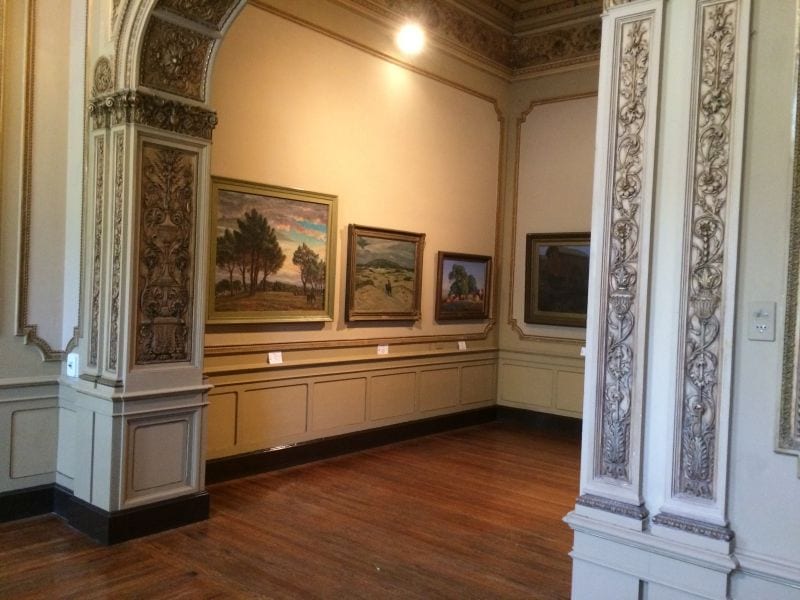
This museum was once a huge home belonging to the woman whose portrait is on the wall when you first enter. The pink colored house is on Uruguay street and is open, free of charge, to anyone who wishes to see inside. Entering the museum, you see that the lady collected art, and, when she passed, left the house and art as her memorial.
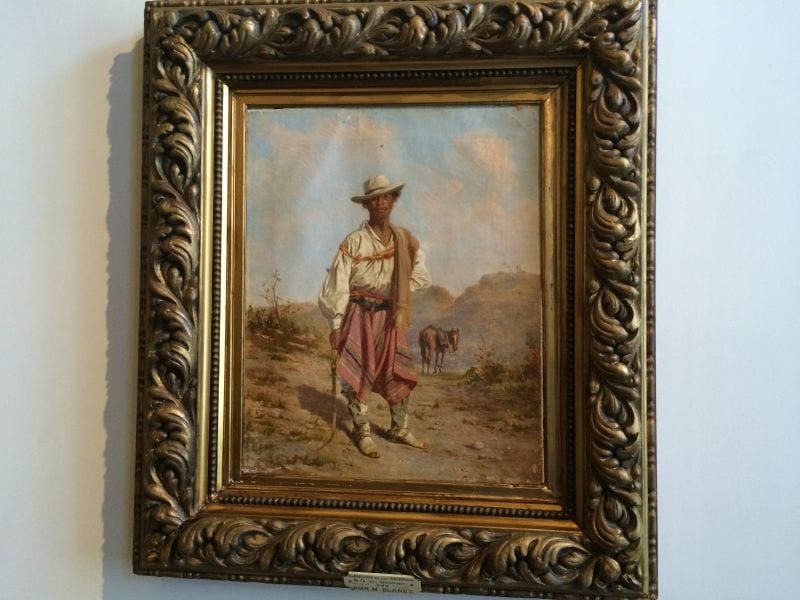
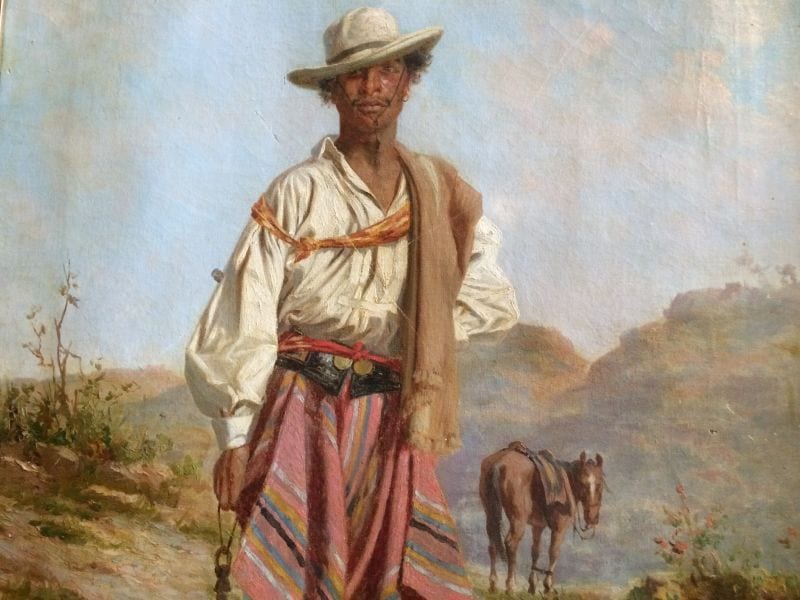
One of the smaller, and maybe least ostentatious paintings, is of a gaucho.
In this oil painting, a solitary gaucho poses for his portrait while his horse looks back at him and waits for marching orders.
ThIs cowpoke travels light, has his bedroll and jerky and saddlebags, wears loose fitting and comfortable clothes, and looks ready for anything. Out in the wilderness, alone, he has to solve problems and is reliant on his wits, his experience, and horse to get him through dangerous times.
Being a gaucho must be a little like being a soldier in war. You have days and days of boredom and waiting punctuated with brief episodes of stark terror when bullets fly past your head, and any one of them could send you where you don’t want to go.
Gauchos and cowboys are something that Uruguay and the United States used to have in common.
However, it is hard to see how two countries who admire self reliance and the pioneer spirit have done so much to stamp it out.
The only place we see wild spirits now Is on television and in movies.
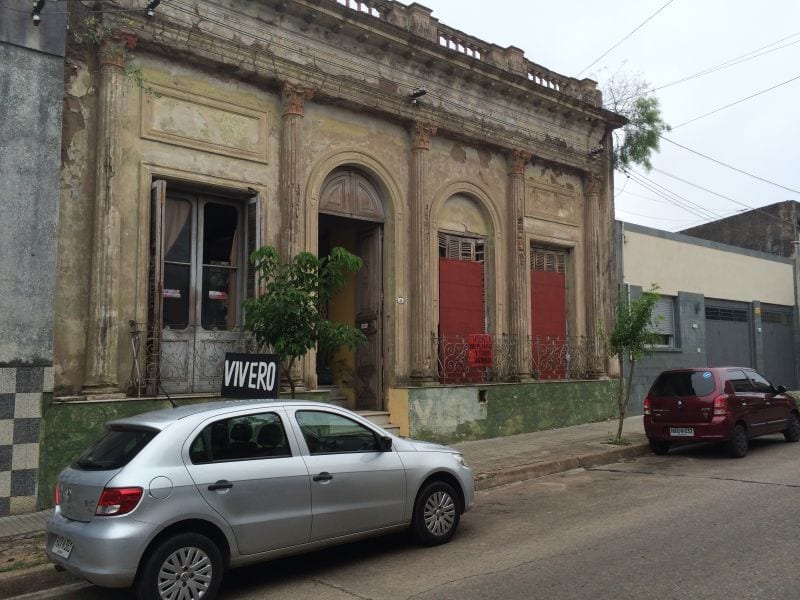
As in Montevideo, there are antiquated homes in Salto too.
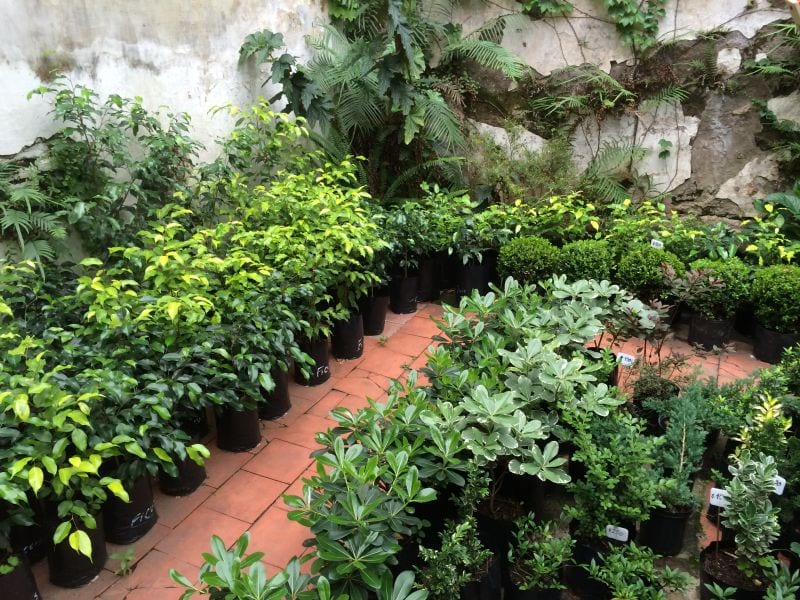
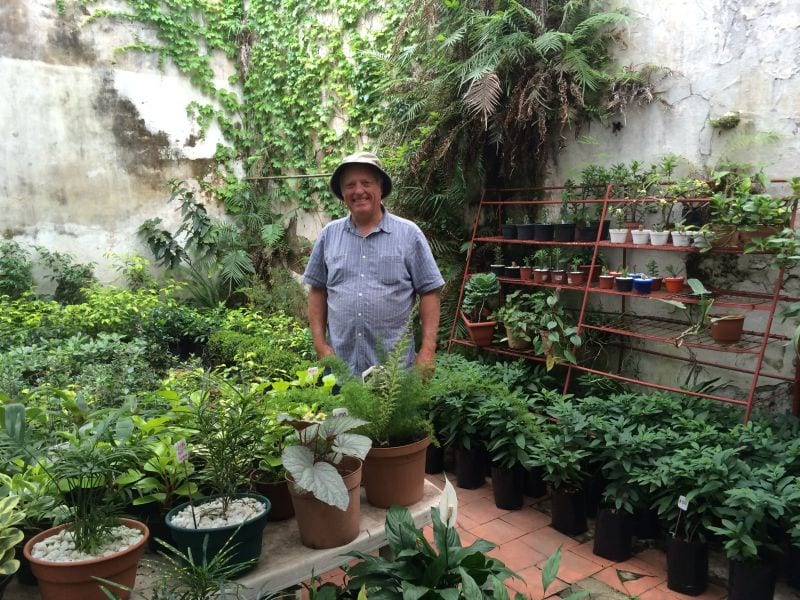
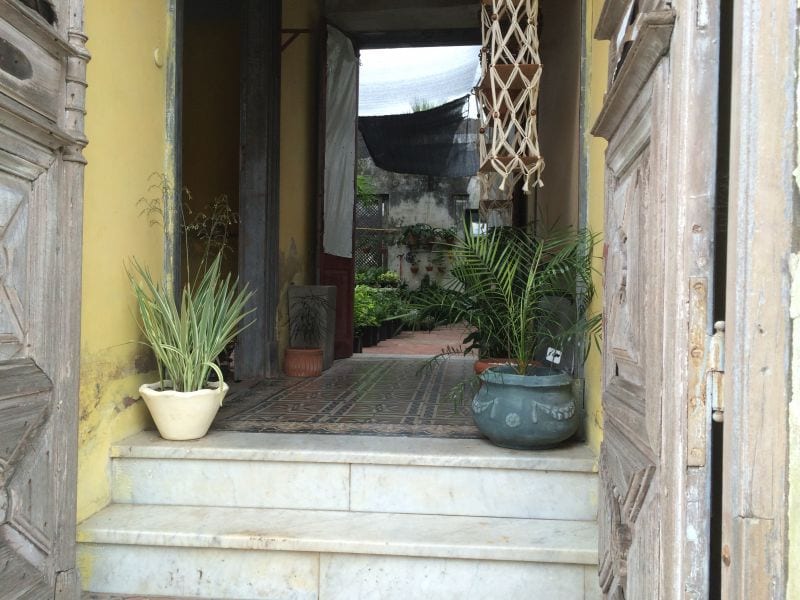
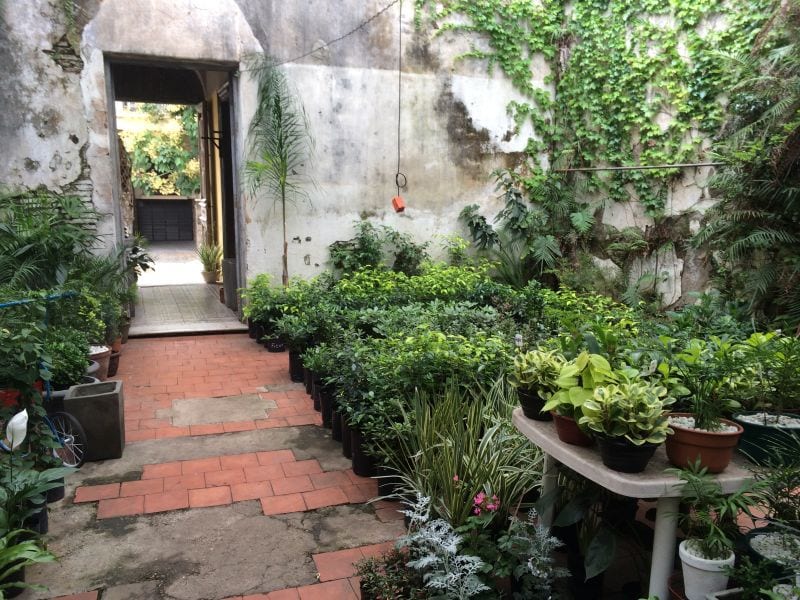
This old casa, on a street off the main thoroughfare, is one that needs more care than it will ever get. While it waits for someone with a dream to fall in love with it, it is a garden shop – El Nuevo Vivero. Inside, plants and trees for sale are placed in empty rooms and since there is no roof on much of the building, rain waters them right where they stand.
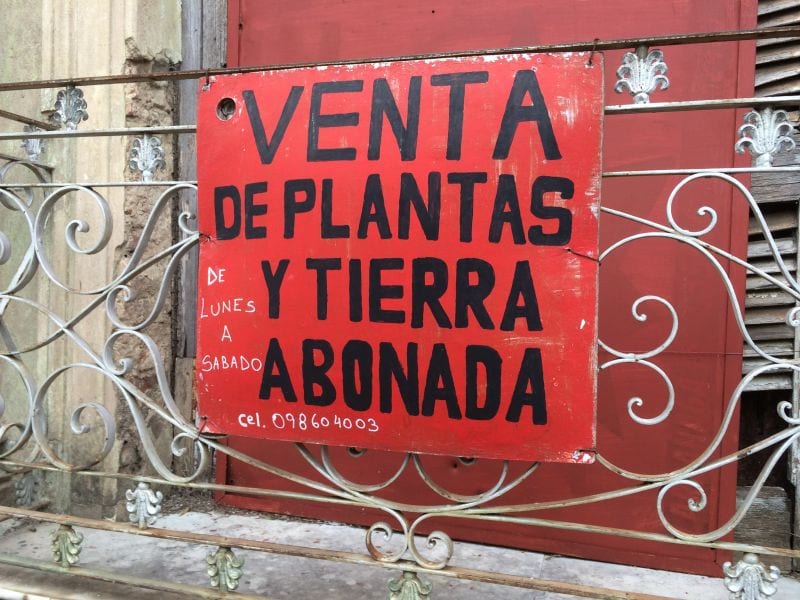
The sign in front says the business is open on Saturdays and Mondays. This morning the front door is open and someone rustles inside. It is Wednesday.
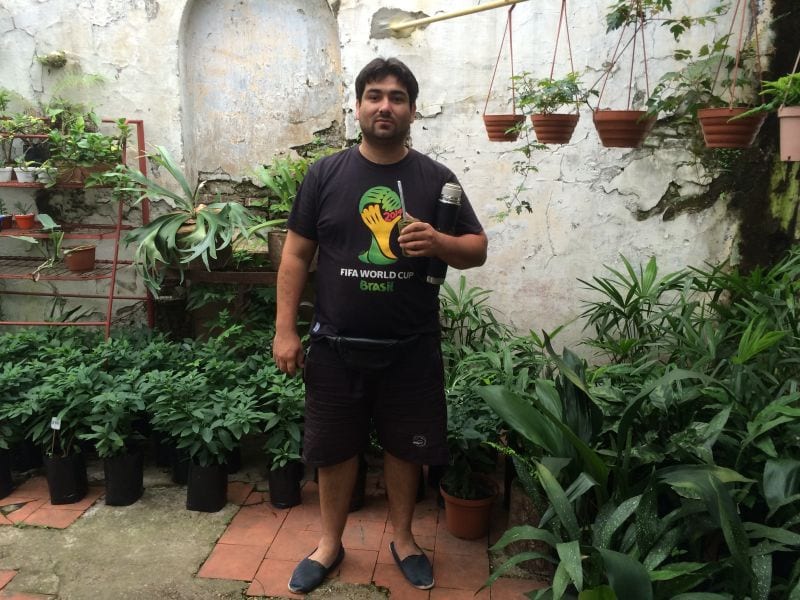
A young man comes to the front door to see what I want and invites me to come inside to look at his business even though he is closed officially.
Guillermo is having mate first thing this morning and shows me some of his plants. He is wearing a Brazil soccer shirt and we laugh about that. People take soccer serious on this continent. How can you be a good Uruguay citizen and not wear a Uruguayan soccer shirt?
In the U.S., this place would be closed for code violations. Here, there is no harm, thus no foul.
When I leave the nursery, the ” Closed ” sign, in the front door, still hasn’t been replaced.
A business, it seems to me, that won’t open its doors for a customer, even when the closed sign is in their window, isn’t much of a business.
Guillermo, owner and caretaker of El Nuevo Vivero, has his finger on the pulses of both plants, and business.
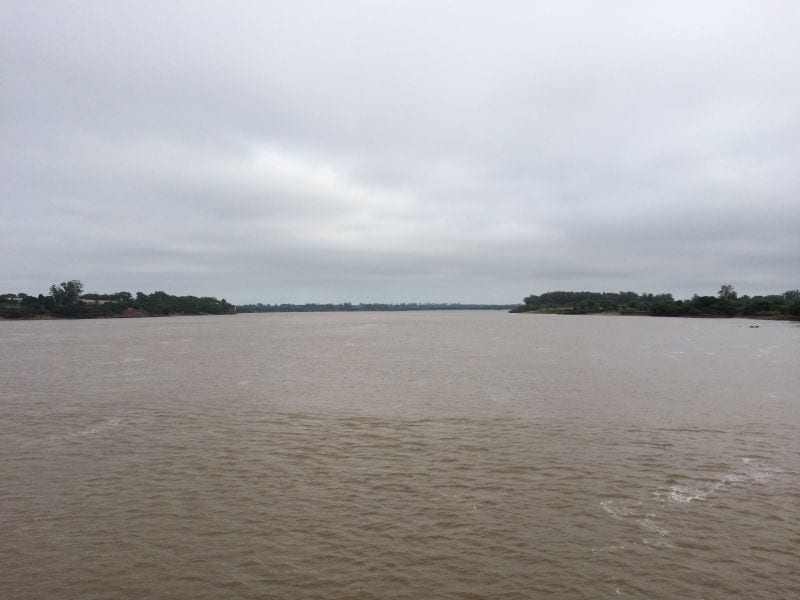
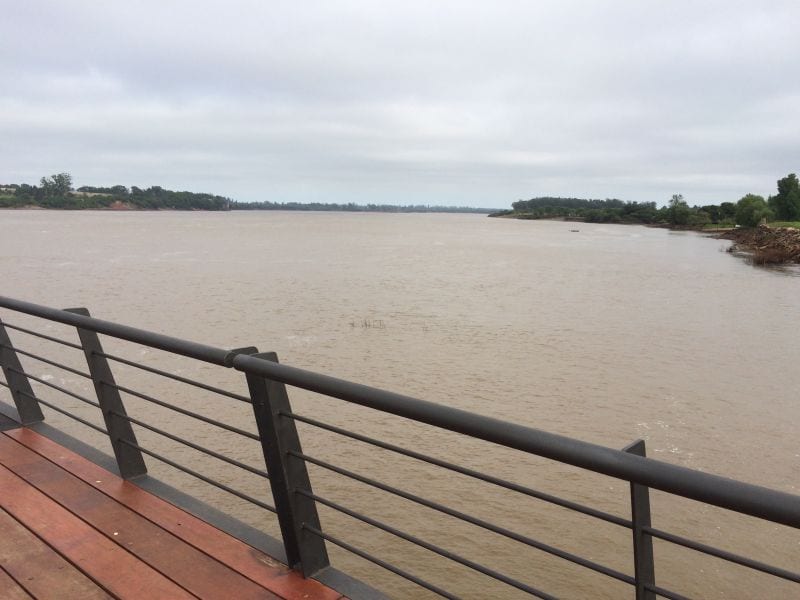
This morning, I walk down Calle Uruguay, all the way to the Rio Uruguay.
This river separates Argentina and Uruguay. Though it isn’t the Mississippi or the Nile, or the Amazon, it meets the rock test. If a body of water is so big you can’t throw a rock across it, it becomes a river. The rivers, long ago, were the original freeways and big paddle wheels moving up and down the Mississippi are still romantic. Mark Twain, as great a writer as he is, looked fondly back on his days as a riverboat captain as some of his happiest.
Walking down Uruguay Street is an easy walk and when you come upon the river you are surprised there are so few craft on it. There is a new pier that lets me walk out over the river. A lady walking her dog takes a few snapshots this morning but no one else, but us, is on the pier. A ferry chugs past taking people to Argentina – those who have their papers in order.
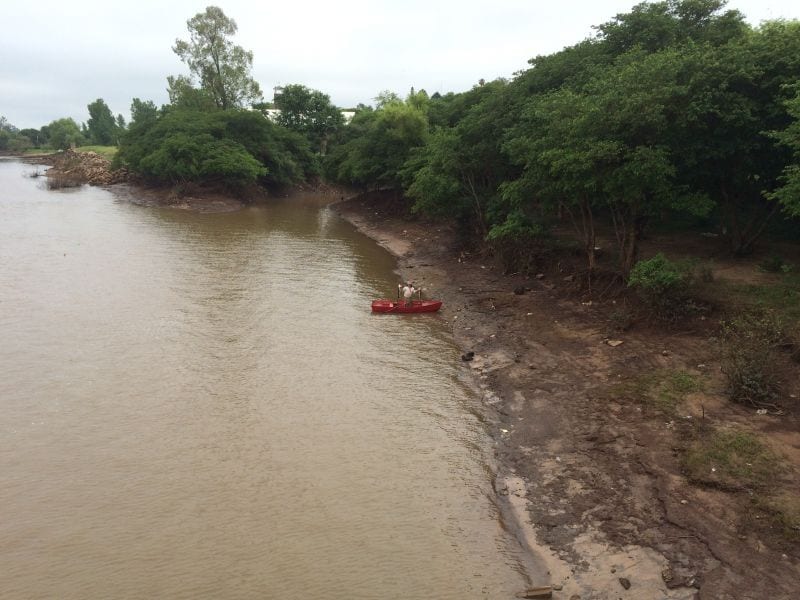
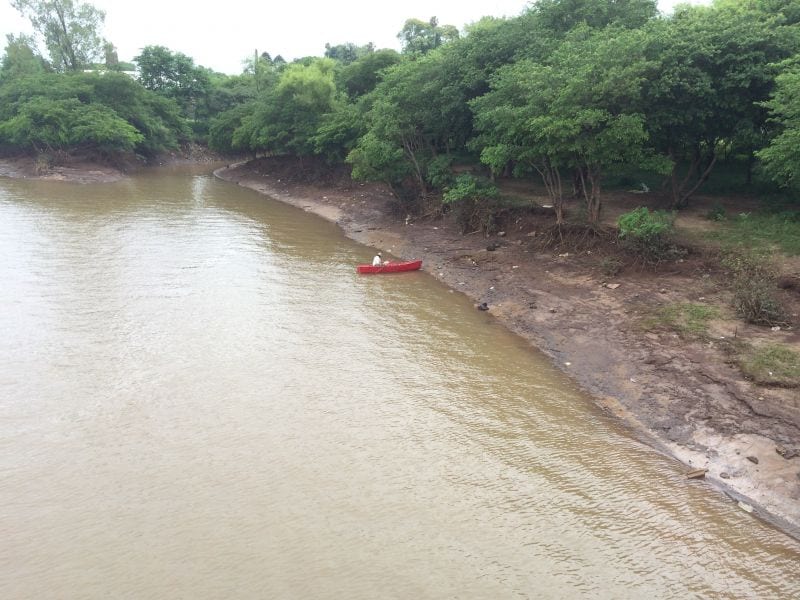
I spy a fisherman docking his small boat on the river bank and hold up my phone to ask permission to take his photo.
He stands up in his boat, lifts two huge catfish he has caught and gives me a thumbs up. People here are so friendly you wish some of it could be spread around the world. His catfish are so big I can see their whiskers from the bridge I’m standing on.
“Go catch some more,” I shout across the river to him.
He doesn’t understand English, but he knows what I am saying.
Big fish give you bragging rights.
One of them is worth more than ten little ones, even if they don’t taste half as good.
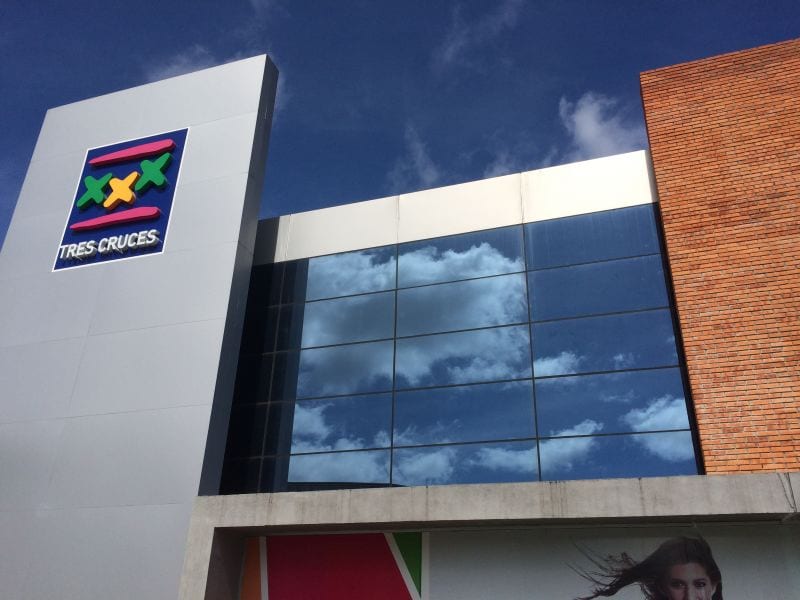
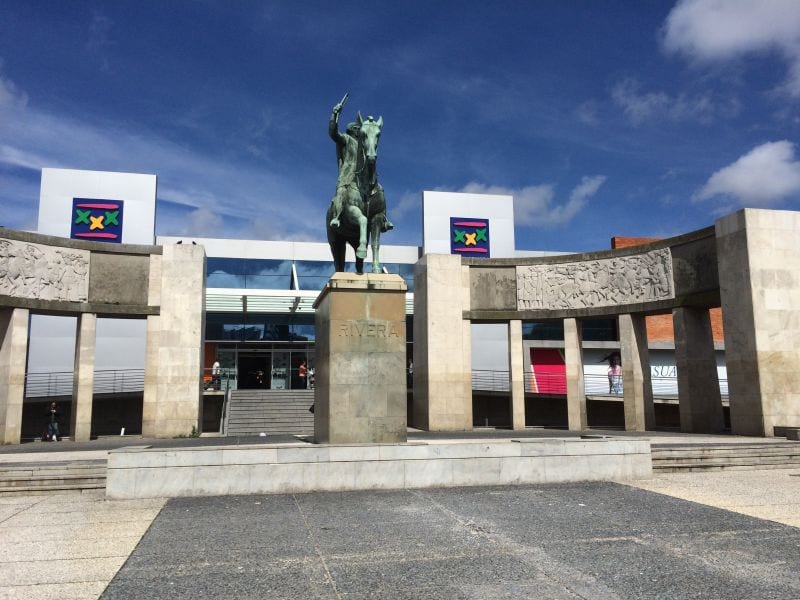
The bus ride from Punta Del Este back to Montevideo takes three hours and ends at the Three Crosses Terminal.
Downstairs, bus companies, representing large and small bus lines that cover all routes in Uruguay, are selling tickets and loading luggage and passengers.
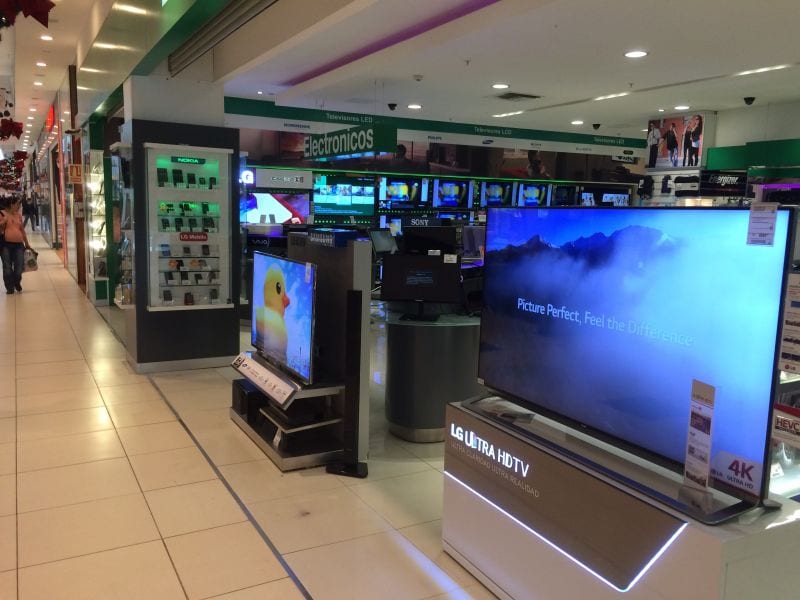
Upstairs, there is a mall with shopping, places to eat, and entertainment. At a place where people from all over the country come and go and have time and money, what better place to put a mall?
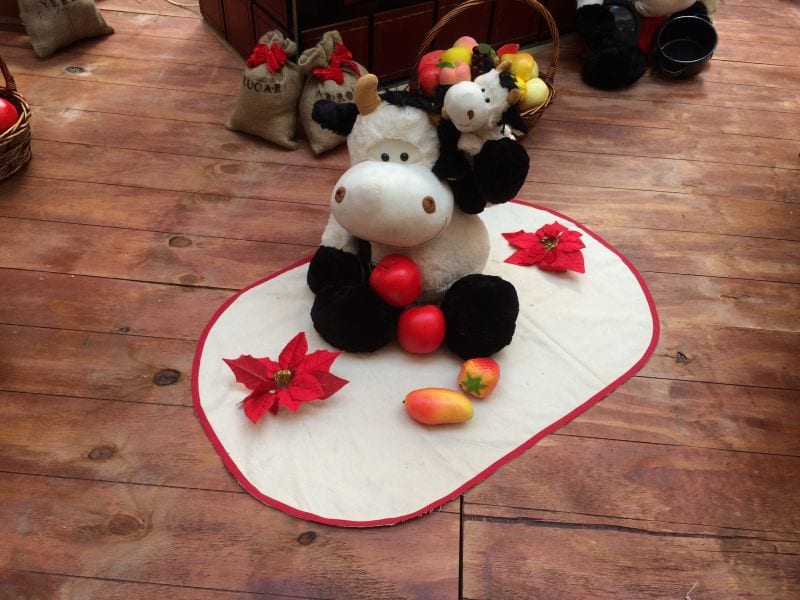
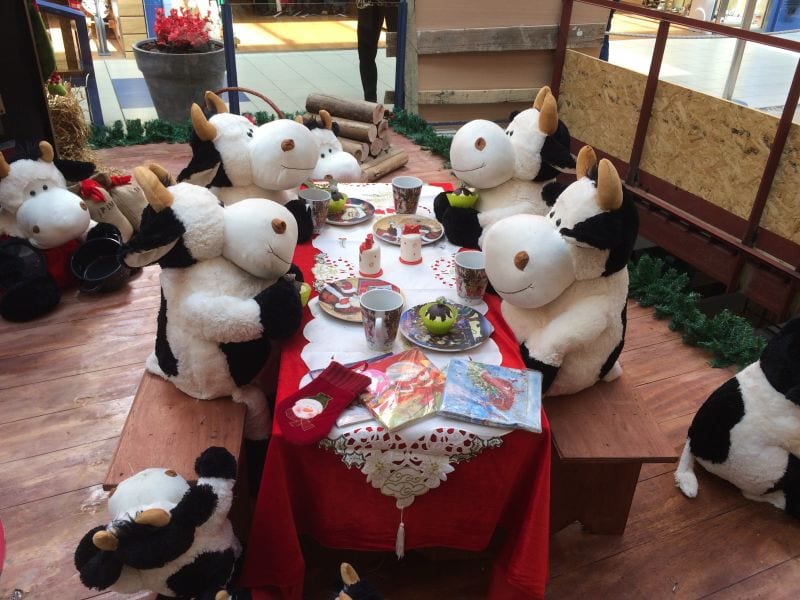
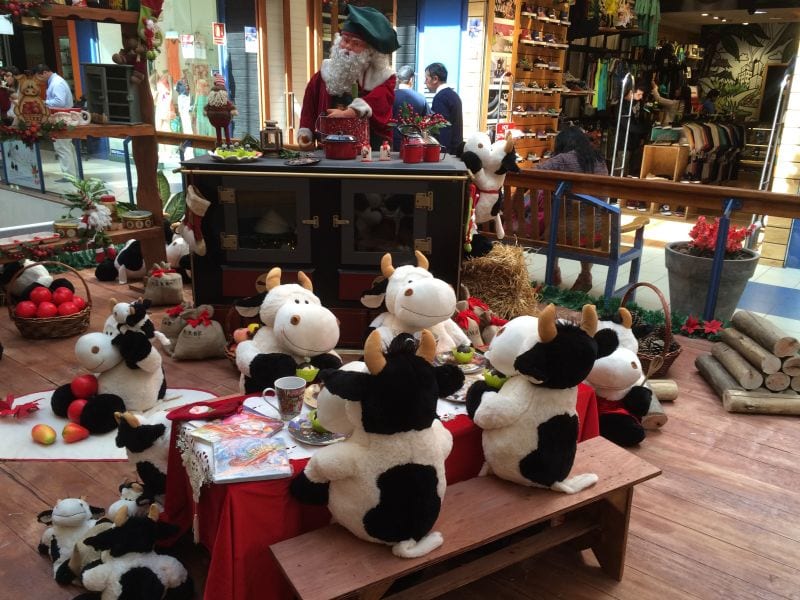
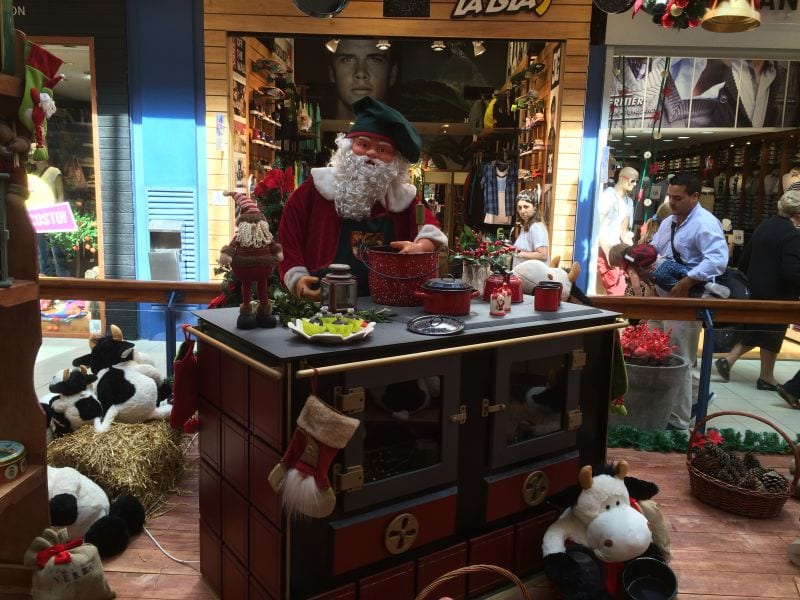
Christmas is here and instead of Santa’s elves, we have cute little cows.
Riding the bus is how i most often get around in foreign countries. The bus service in Uruguay is well run, not expensive, and connects you to all towns and cities of note whenever you have to go.
From Three Crosses, I am headed for Salto, a city famous for hot mineral springs and the perfect travel doctor’s prescription for a weary traveler.
Warming up in hot mineral baths is something even the ancient Romans did after a long year of subjugating and taxing their neighbors.
We have hot mineral baths in New Mexico, too.
These have to be better because I had to come so far to get here.
If I were a cow, the only place I would want to live would be Uruguay.
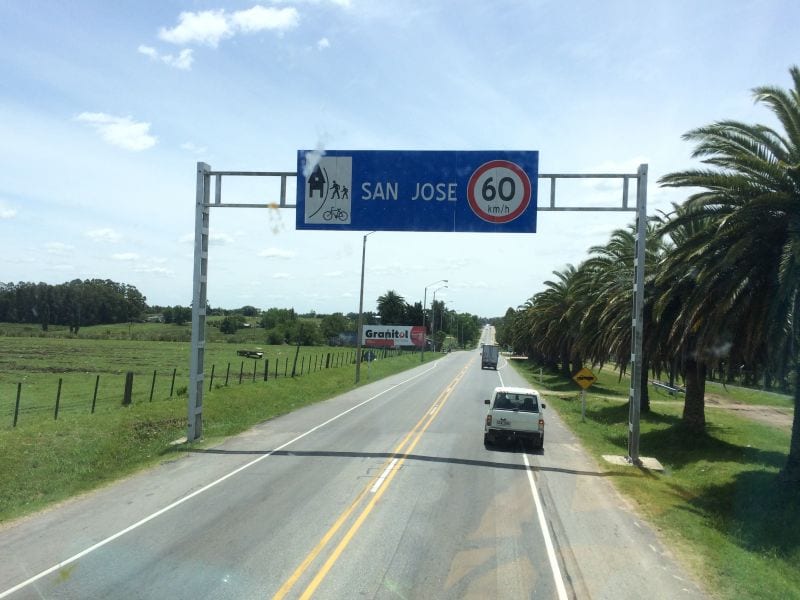
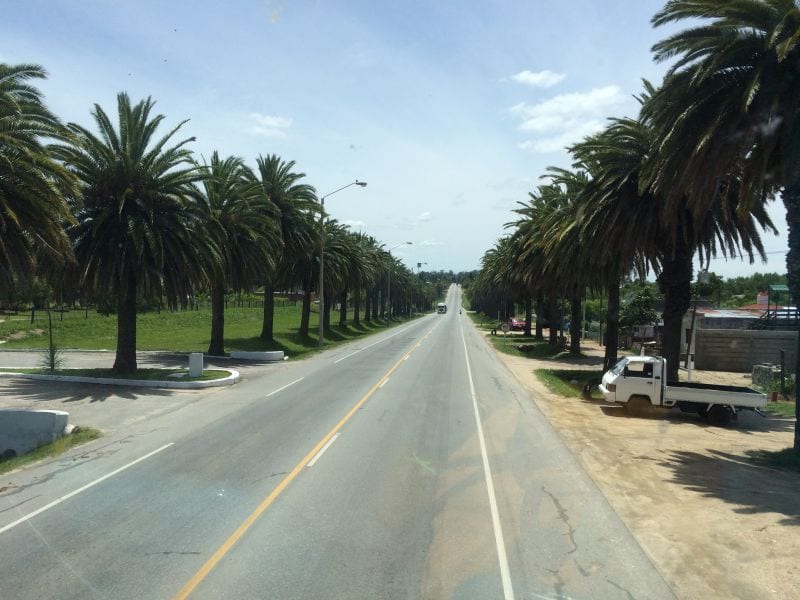
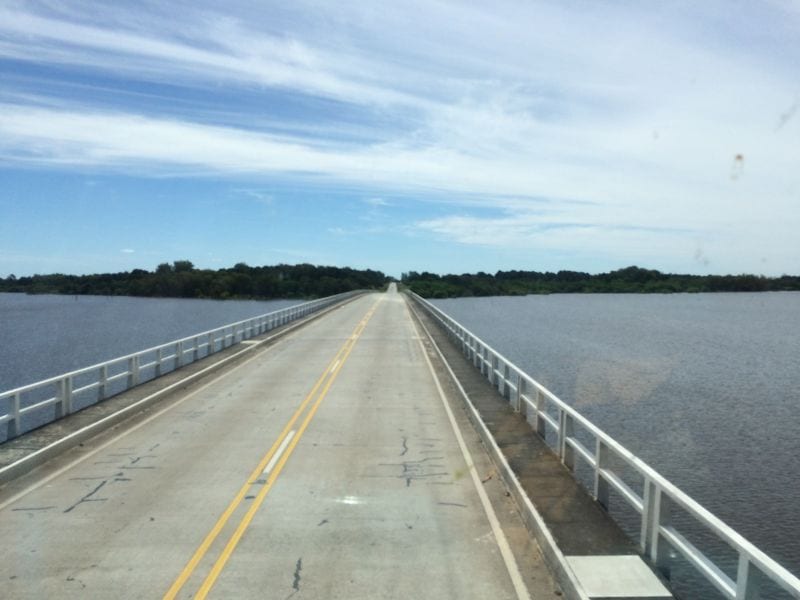
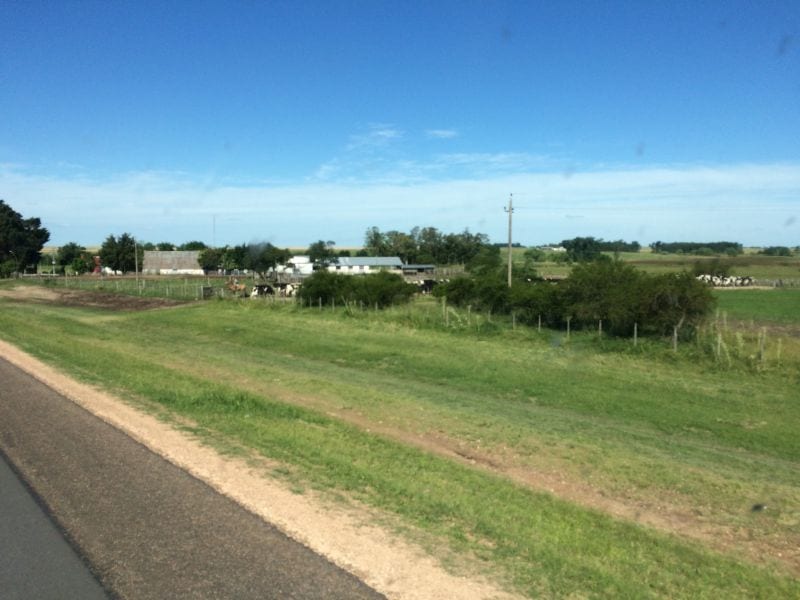
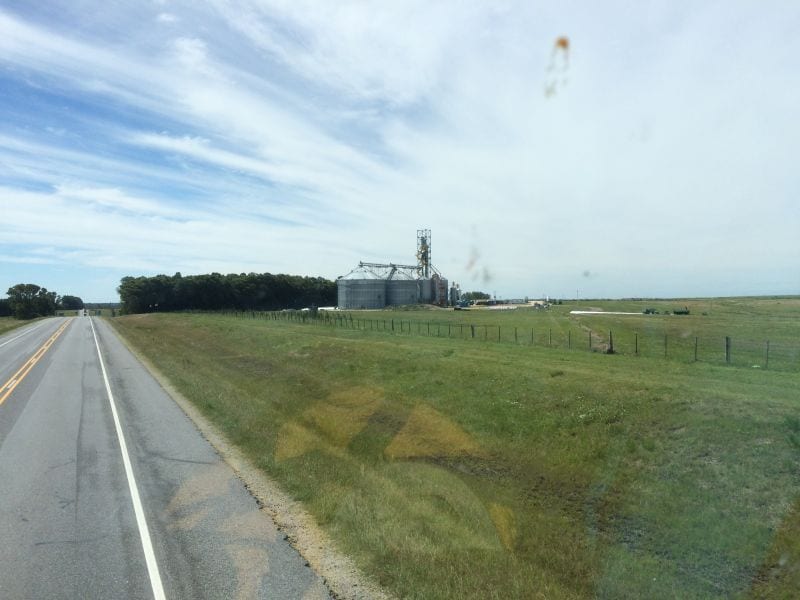
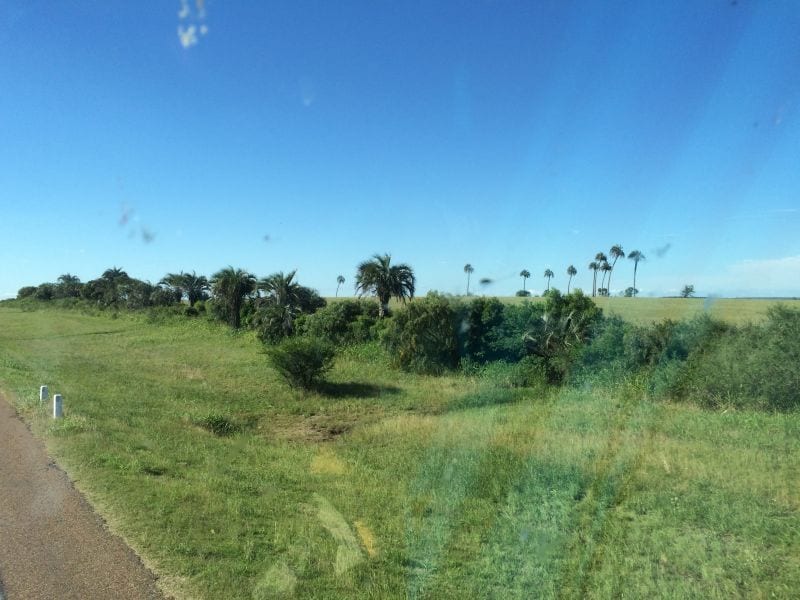
Much like Arabs love their desert and sailors love their ocean, cows have to love this country. Those of us going to Salto on Monday, and there aren’t many of us, board the bus at twelve thirty in the Montevideo terminal and don’t see anything but green grass for the next seven hours. In many places the grass is knee deep, and, along the way, there are cows, horses, sheep doing what they do best – grazing.
The panorama is expansive rolling hills covered with green under a light blue canopy that supports puffs of white clouds drifting in a gentle wind like small sail boats.
You have cries of overpopulation yet we drive through thousands of acres of terra firma with water, the potential to raise unlimited cattle and crops, and few people.
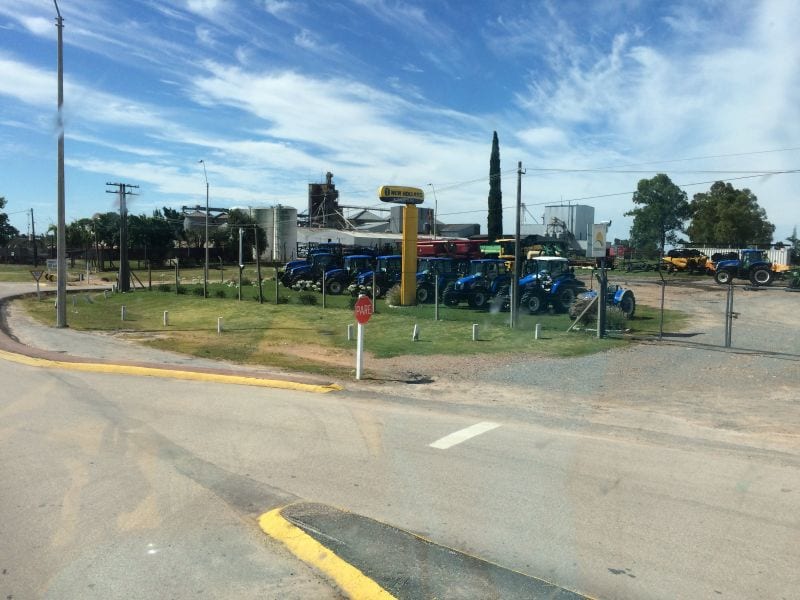
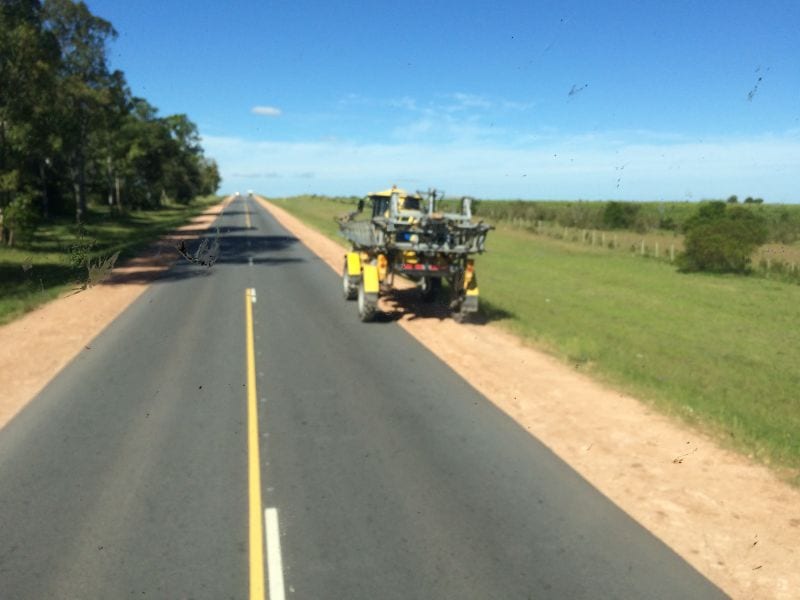
It is not like there isn’t money in the countryside. You see expensive farm equipment parked in front yards and they are the same expensive machines you find in Ohio or Kansas or Texas. You see nice vehicles and big houses on hills overlooking the highway that have impressive iron gates, tree lined entries, and panoramic views.
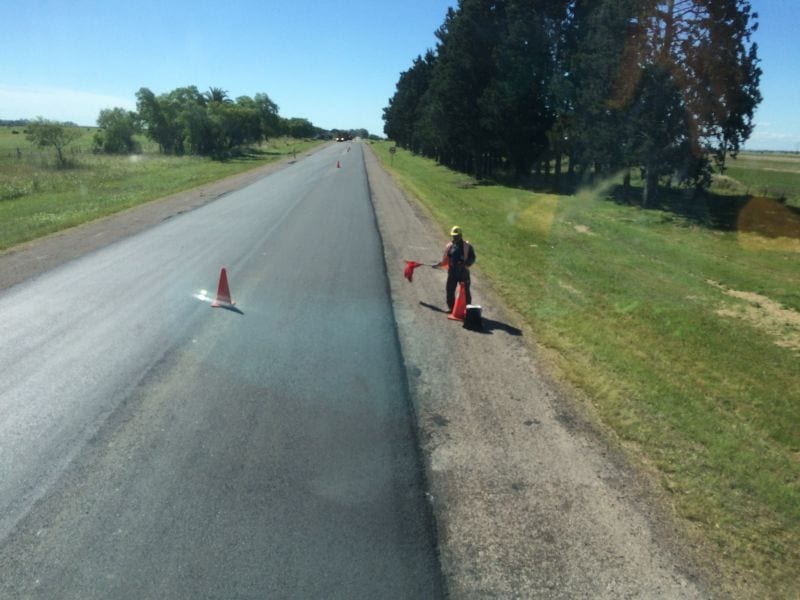
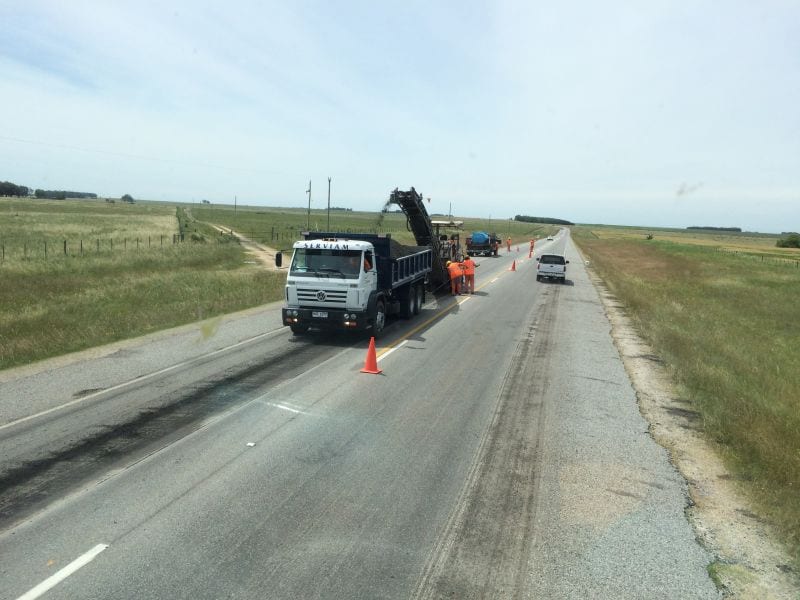
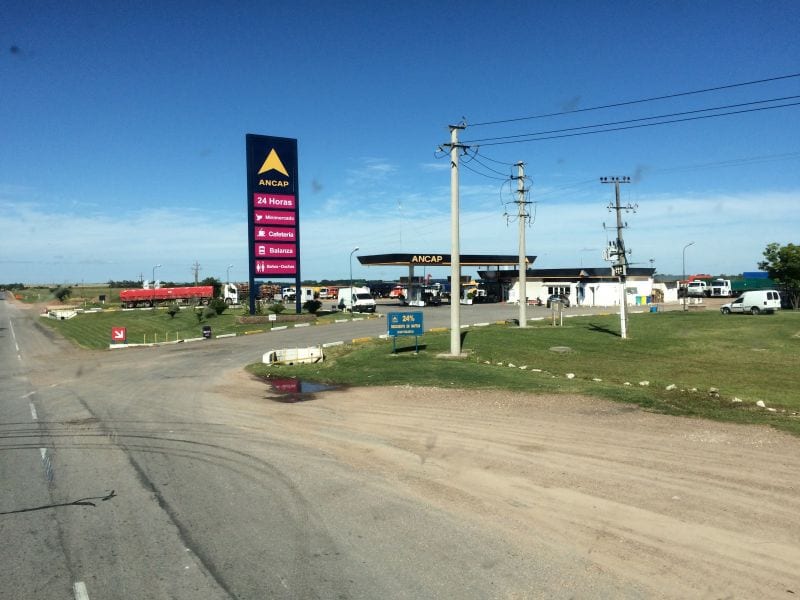
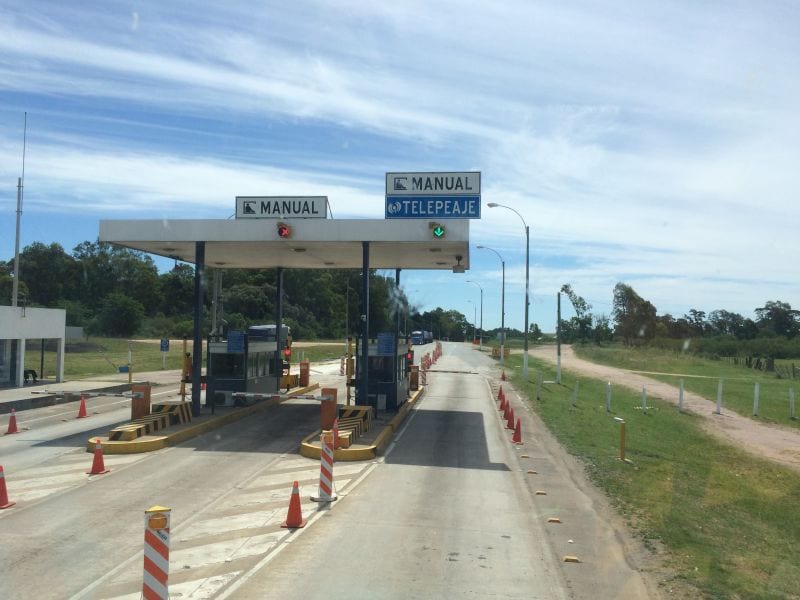
Along the way we motor through rolling grass covered hills, wooded areas that grow timber harvested for several large paper mills for a world that is still not paperless. The government is working on the highway and we go through several toll booths that signal different provinces of the country. Little towns we drive through here are trying to stay viable,just like those at home, trying to stay alive as their population ages, kids move away, storefronts shut down, and expenses of keeping city services continue to rise.
They should have named this country Greenland, but that name has already been drawn out of the hat.




Recent Comments