Chocolate is a money maker for Ecuador.
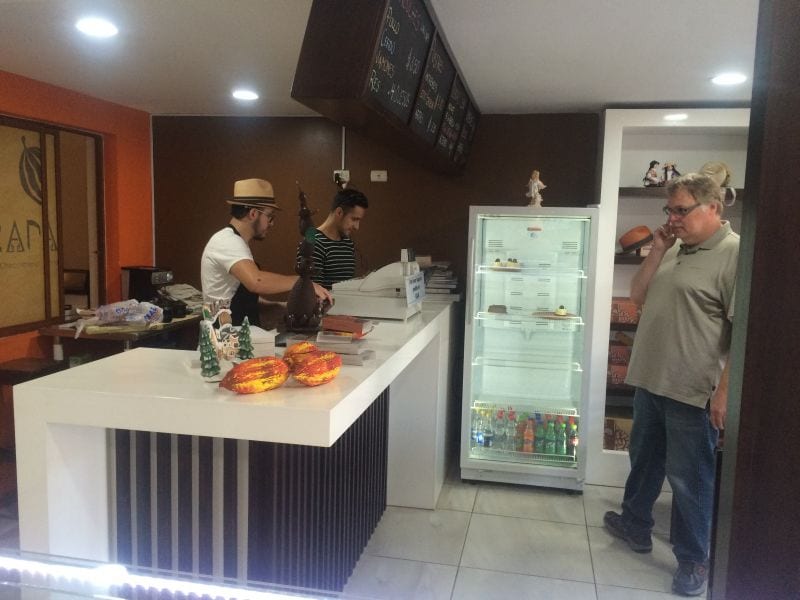
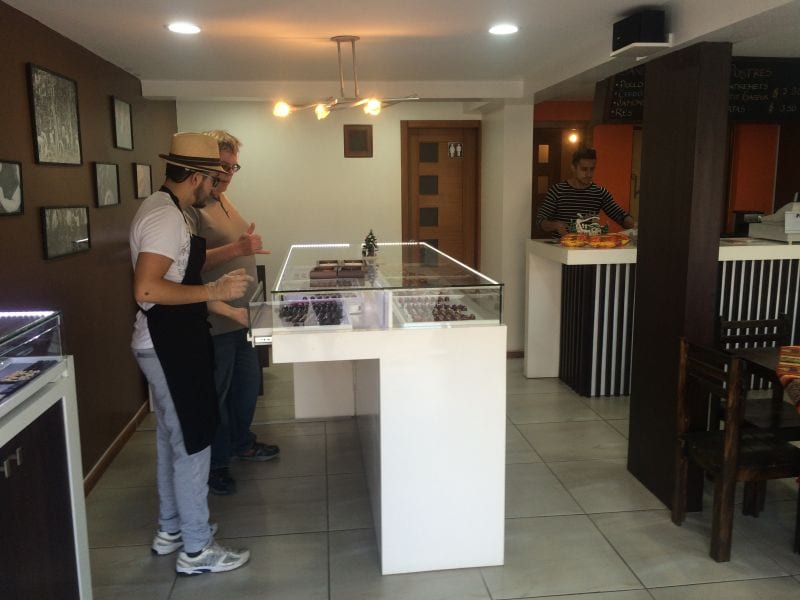
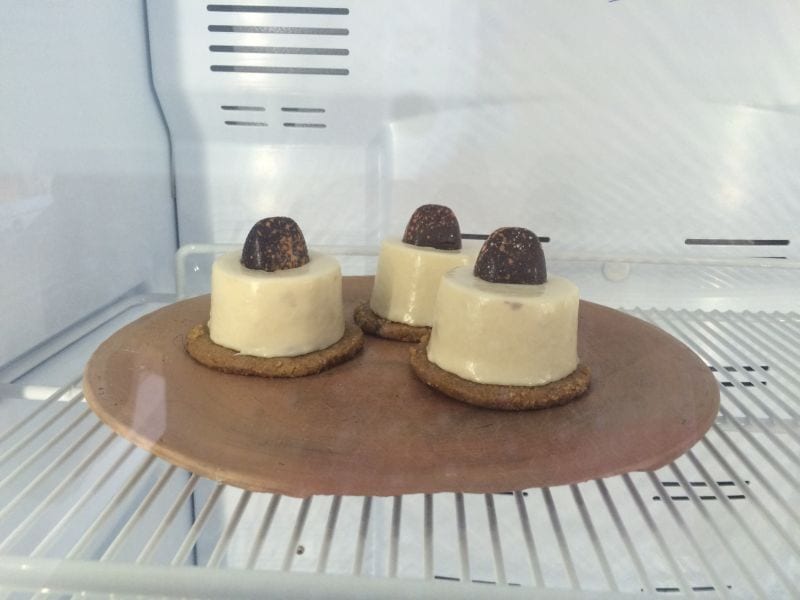
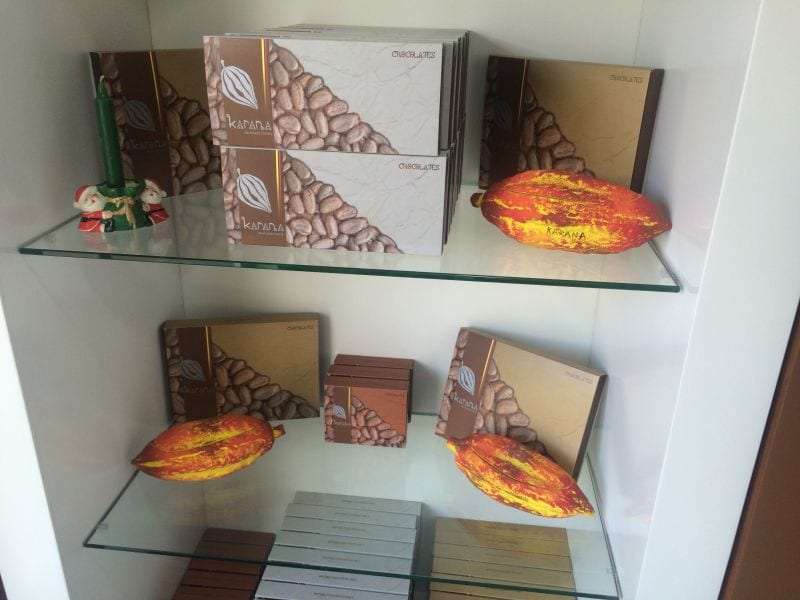
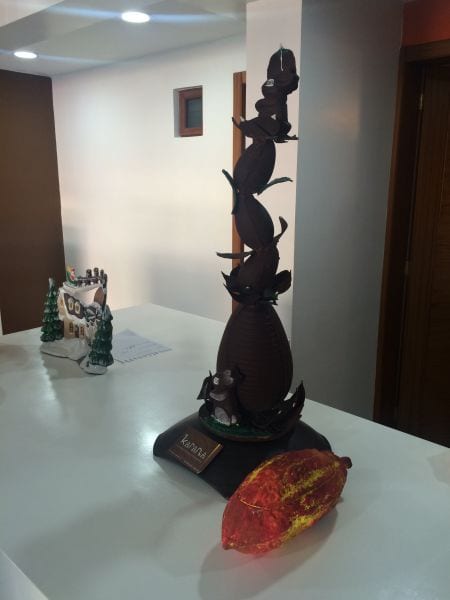
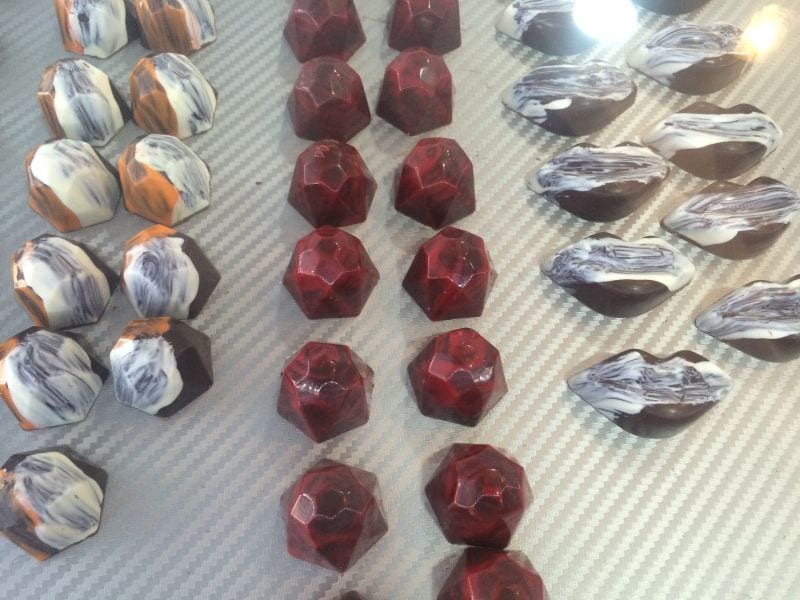
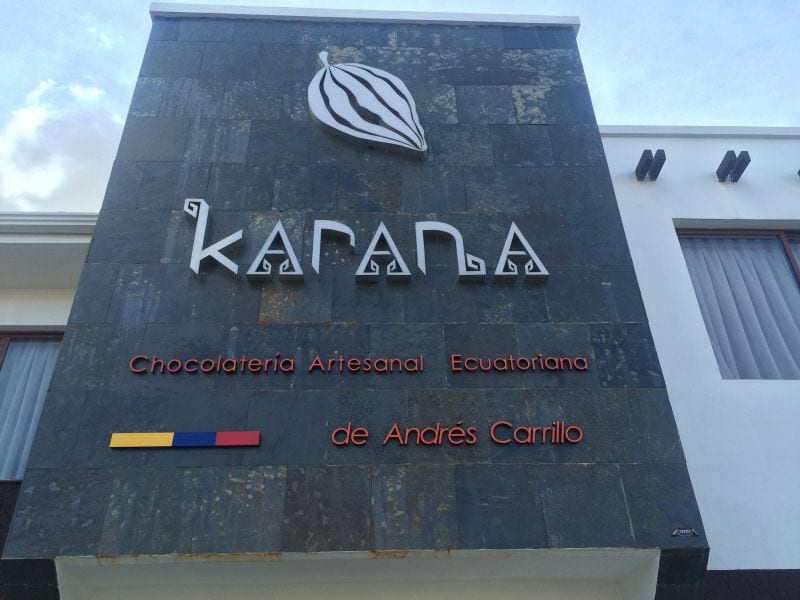
Karana is a Cuenca chocolate shop that uses only the best chocolate ( arriba) and makes their own delights in a kitchen in the back of their showroom.
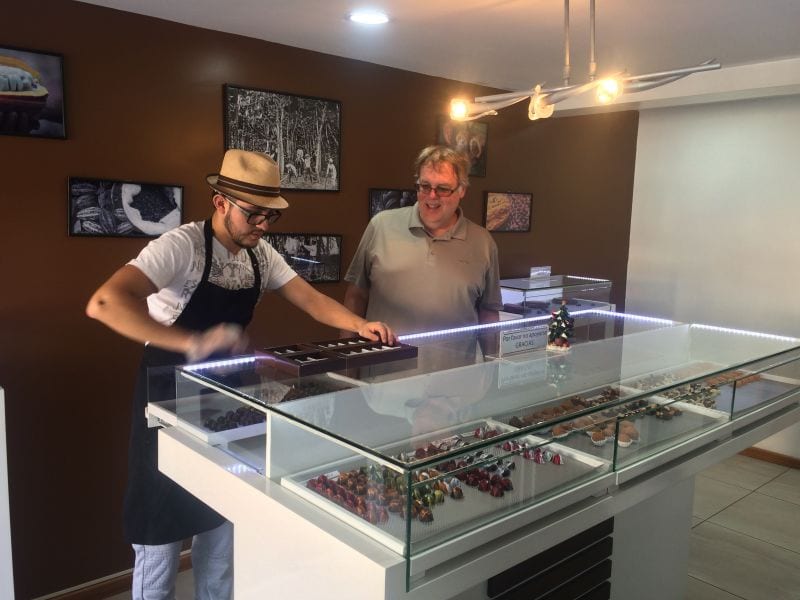
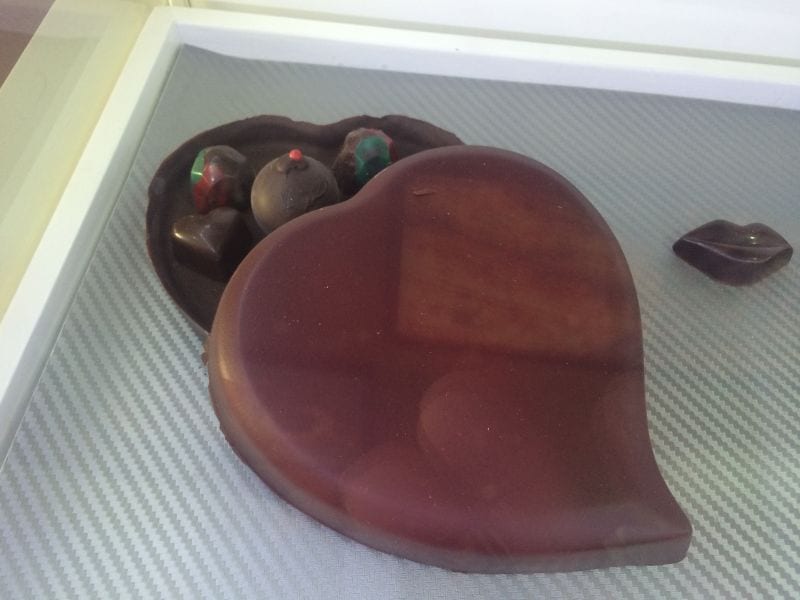
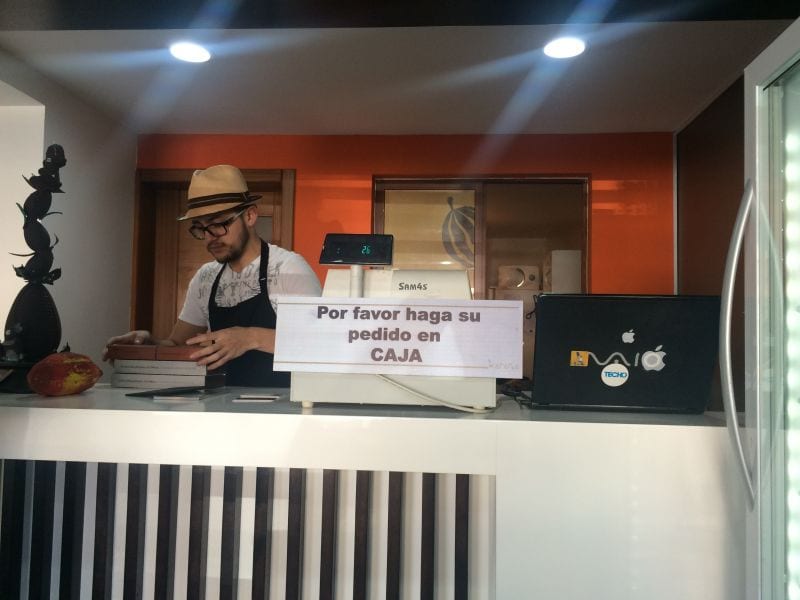
This business is located at the intersection of Guayas and Pinchincha and this morning, Andres, the proprietor, is pleased to show Tom prepackaged boxes of fine chocolates. He also slides out trays of little gem like taste bombs from showcases to build Tom a personalized box of tastes he can take home to his Aunt Priscilla.
A nephew who brings you chocolates from Ecuador is a keeper and I can see Tom and his Aunt both digging into her gift package while listening to ” Saint Louis Blues ” on a vinyl recording pressed in the 1930’s by Satchmo as a light Seattle rain washes the kitchen windows.
Tom, visiting family in South America, played piano solos at the jazz club last night, and, by chance, I ran into him by the Cathedral and tag along on his chocolate mission to Karana’s.
Little adventures happen frequently in Cuenca,
Serendipity is a huge part of this city’s charm.
The road from Cuenca to Saraguro is two way but wide with shoulders on both sides, coming and going.
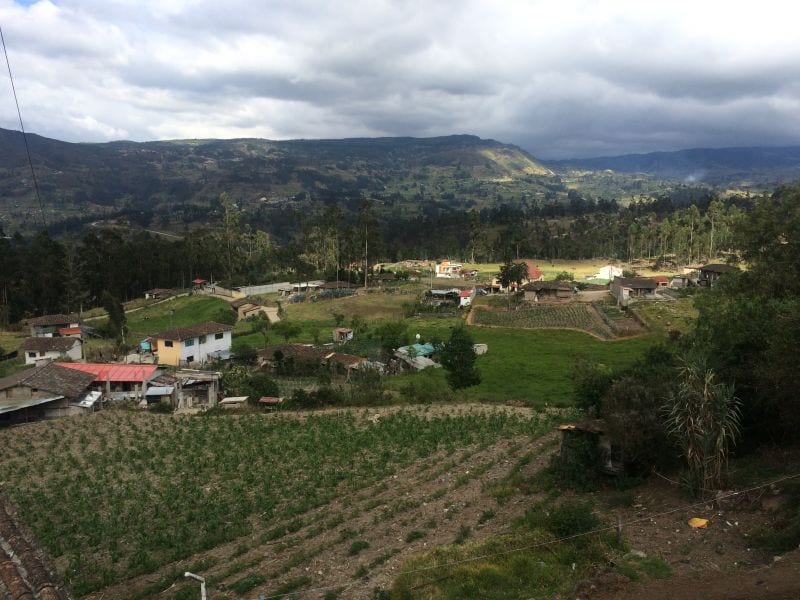
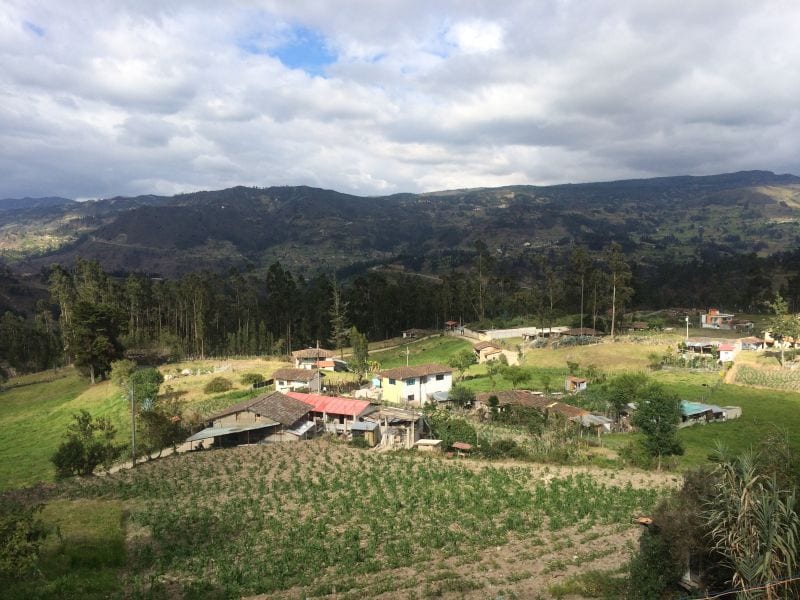
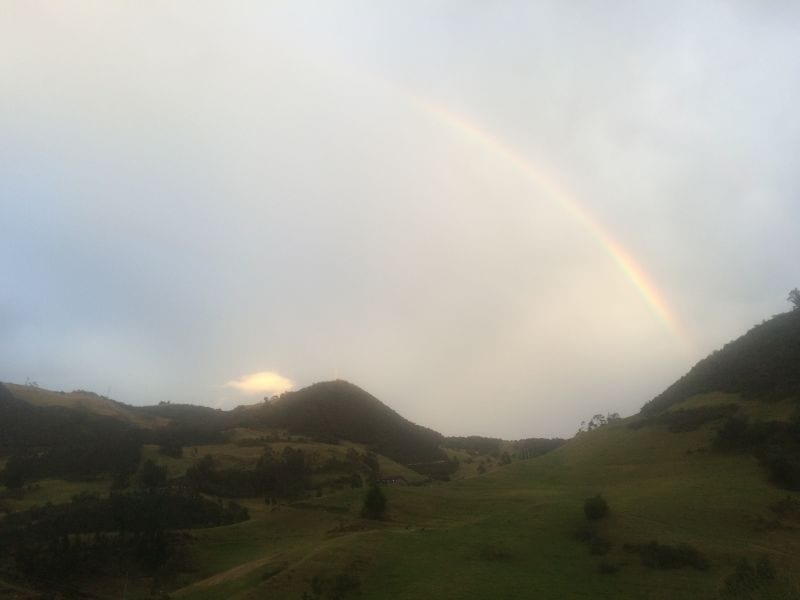
It winds up and over several large mountain ranges, in and out of valleys, over a few bridges, and, all the way, runs just below huge clouds scraping the top of the mountains.
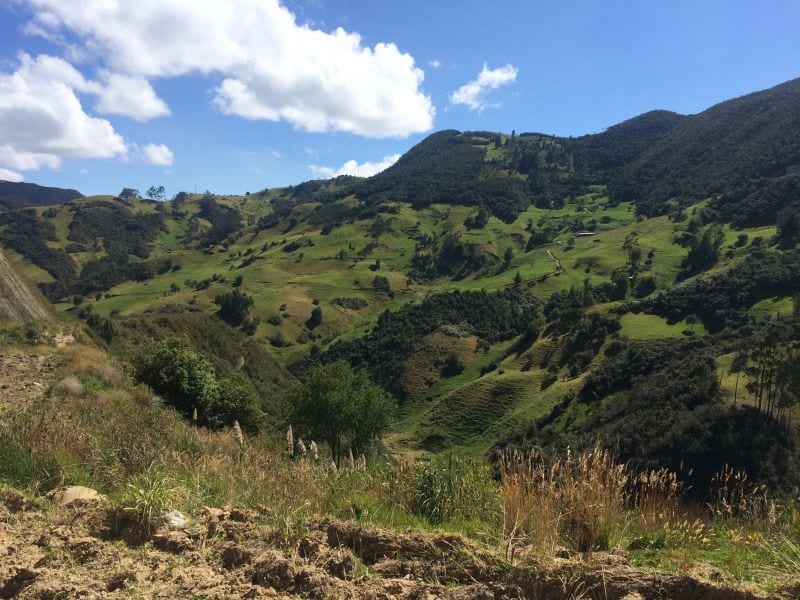
Part of Ecuador is on the Pacific coast where driving is flat, part is in the Amazon where there are few roads, and the remainder is in the Andes Mountains. If you get motion sickness you take dramimina because even a good driver is not going to take bumps and grinds out of this highway. Looking out you see a patchwork of green, some cultivated and some not. As far as you see there are mountains, clouds, green, and so many hills and valleys that it would take a road man centuries to level them out with his yellow Caterpiller.
Today, Marcos drives. He is an Ecuadoran who worked in the United States and came home. Marcos can help you get a bank account, settle up with a Doctor, find you a good lawyer, or just explain how things work. Today, he gets Carol and I to Saraguro and back and that is worth a million.
Today, I am feeling like a sailor on dry land after months at sea. Riding in the back seat is no positive. When you drive at the top of the world, vertigo is your companion. This must be what it feels like riding a bull in a Texas rodeo.
Photos and words have a hard time doing justice to these vistas.
It was Carol who put this trip together.
When we first met, I was struggling up the stairways from the Plaza Otorango faint with food poisoning. She took the time to help a stranger.
She gave me a few drops of Dragon’s Blood, a natural Ecuadorian remedy for the “grippa. ”
I recovered and came back to say a proper “Thank You.”
Good people are close at hand but it sometimes takes food poisoning to find them.
Cuenca is a World Heritage City.
World Heritage cities possess geographical, cultural, artistic, archeological, and architectural wonders which UNESCO believes are worth protecting.
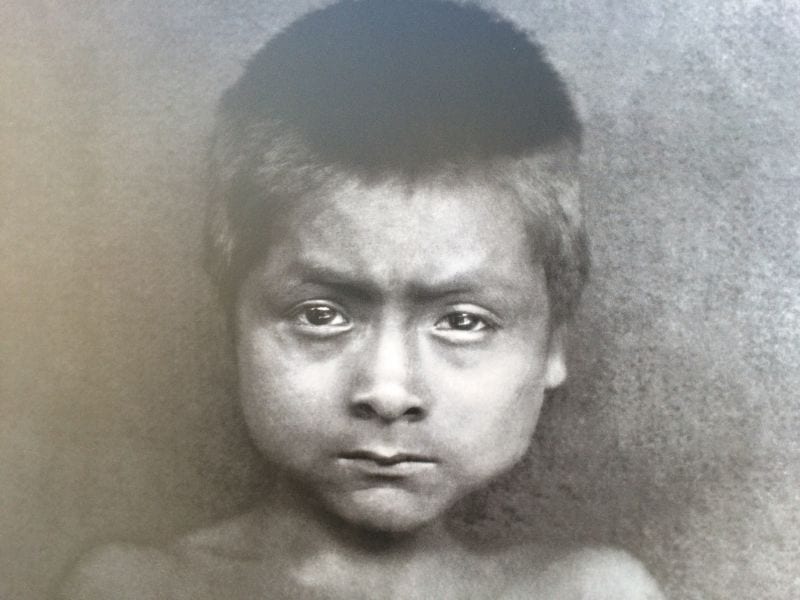
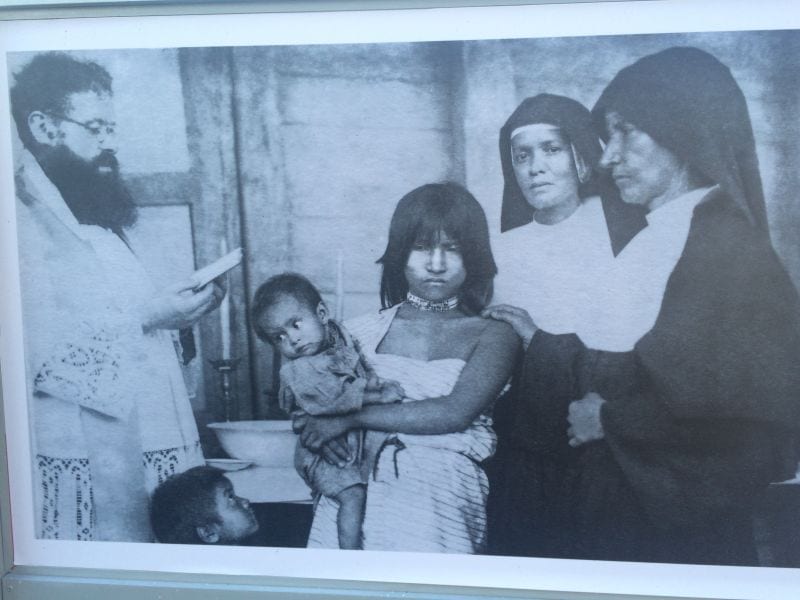
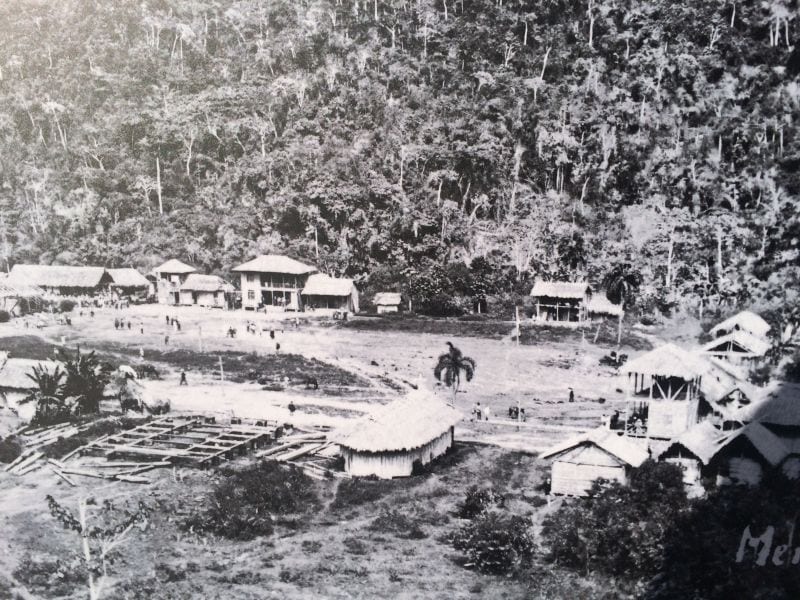
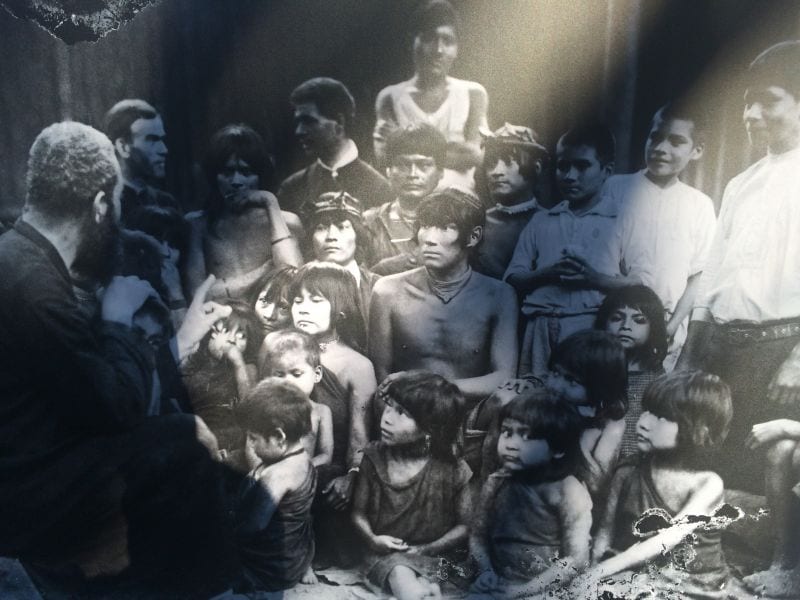
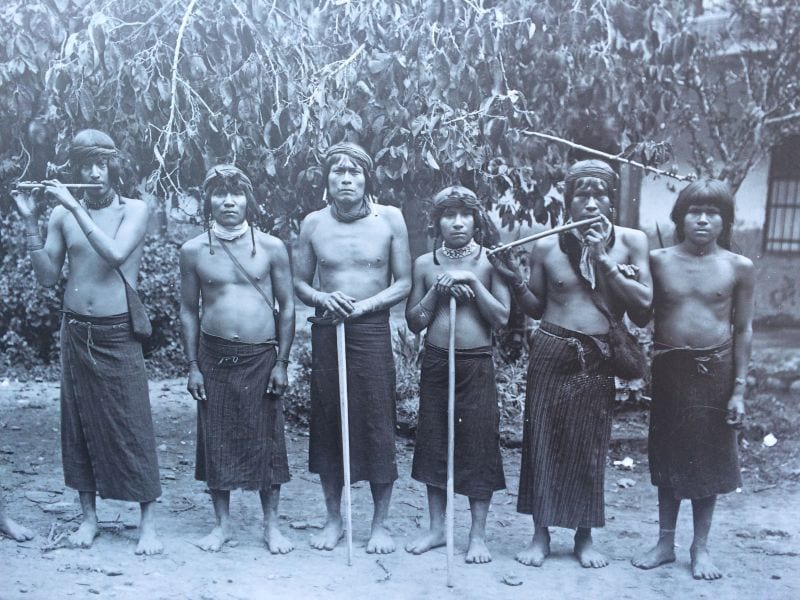
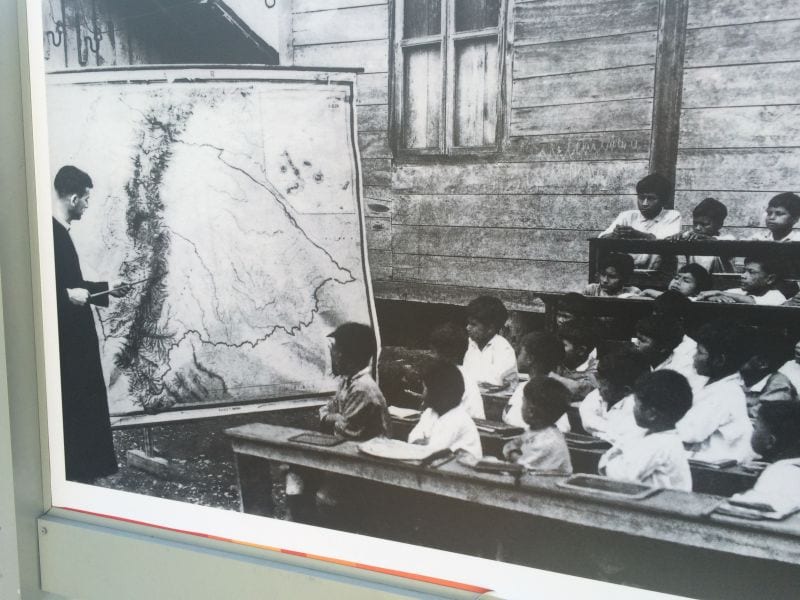
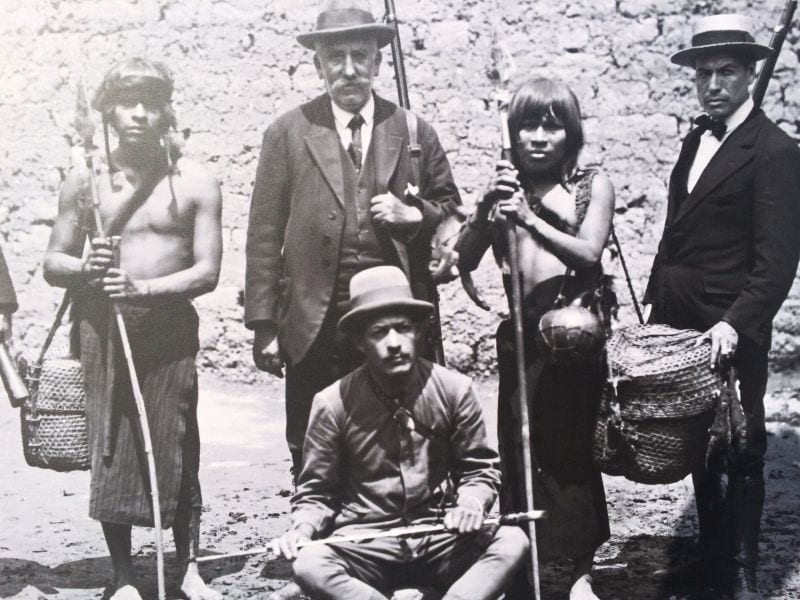
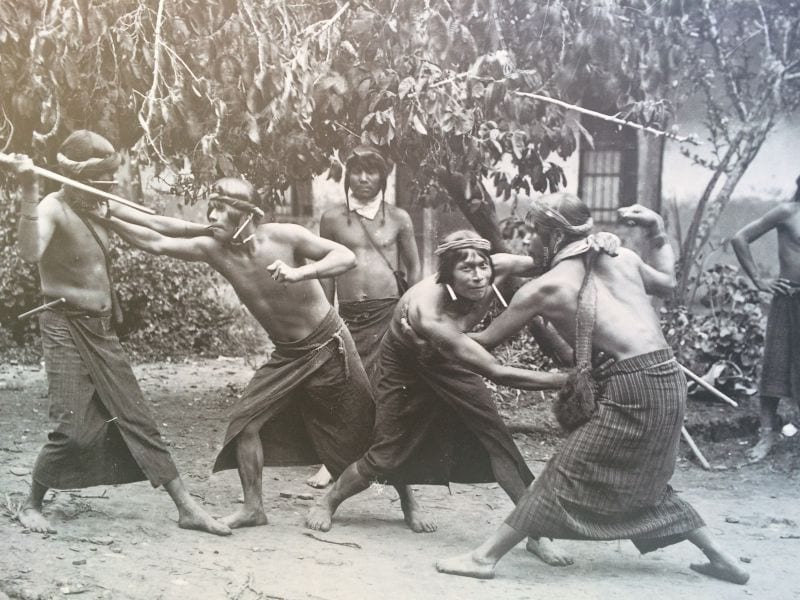
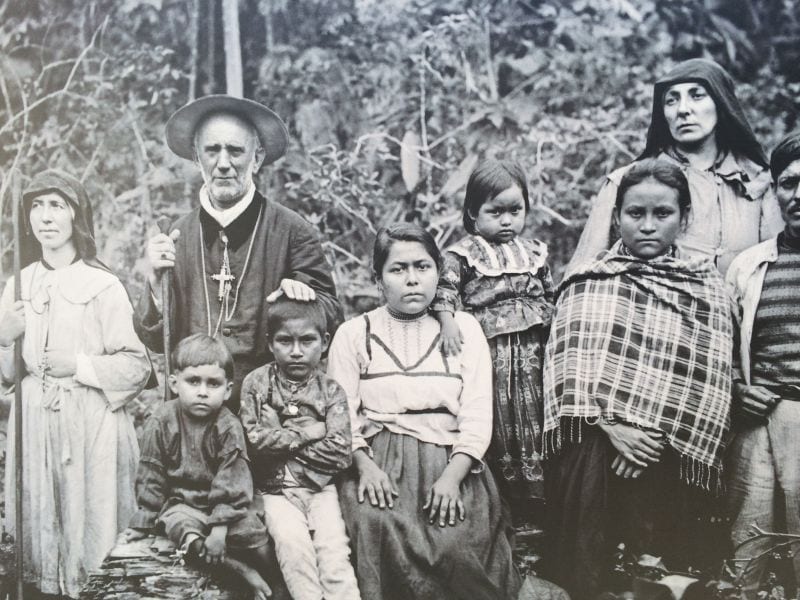
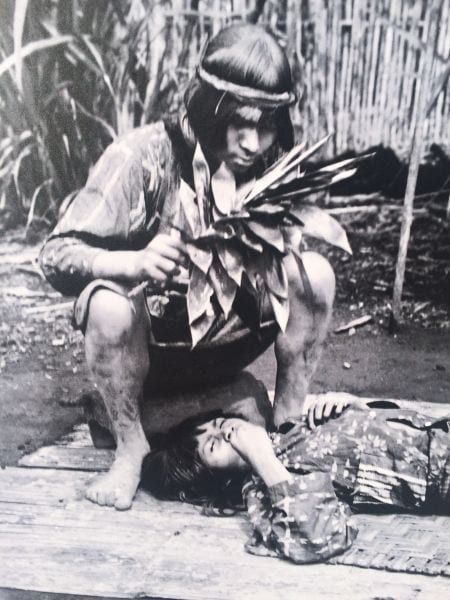
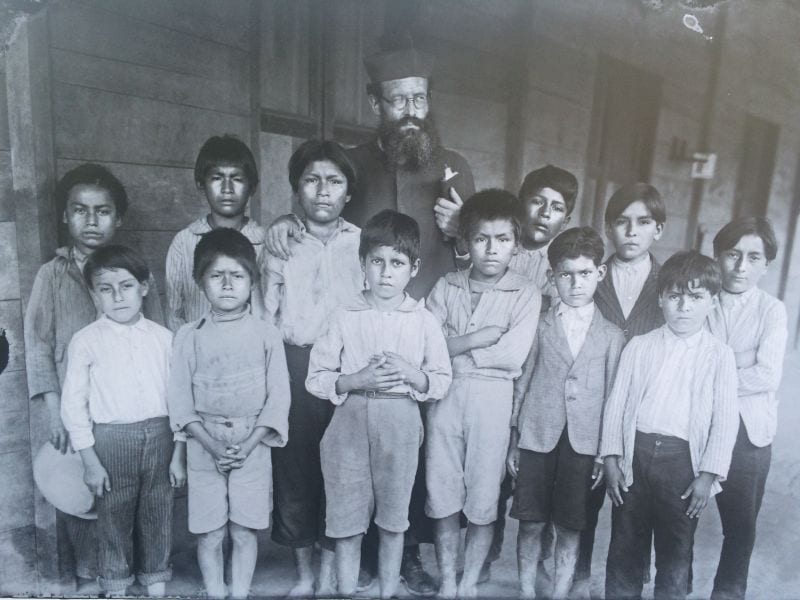
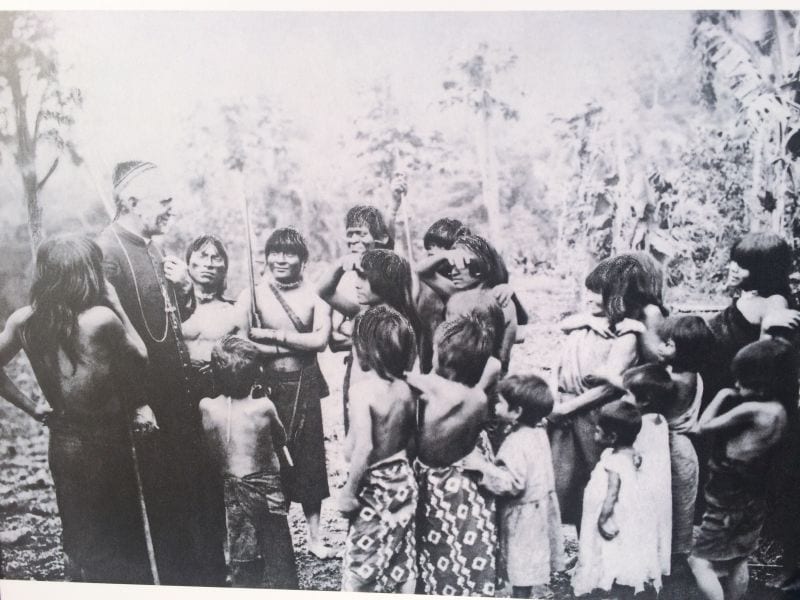
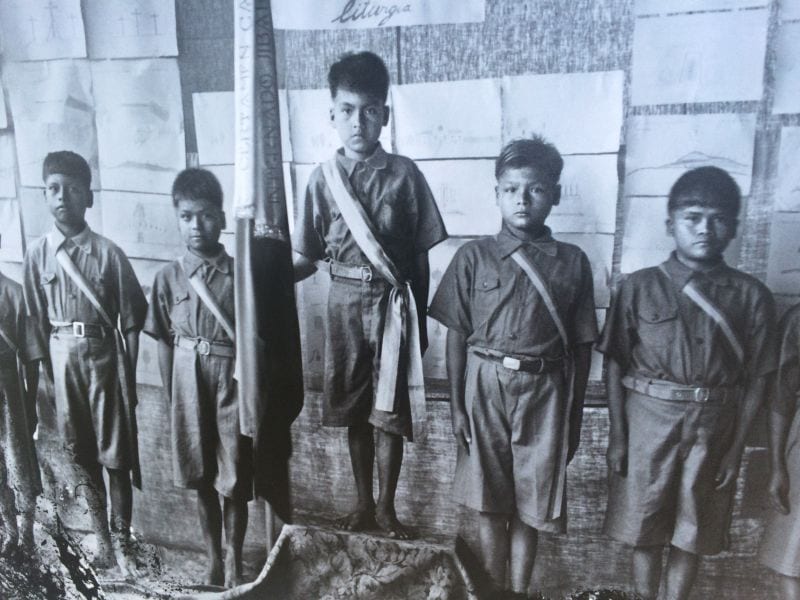
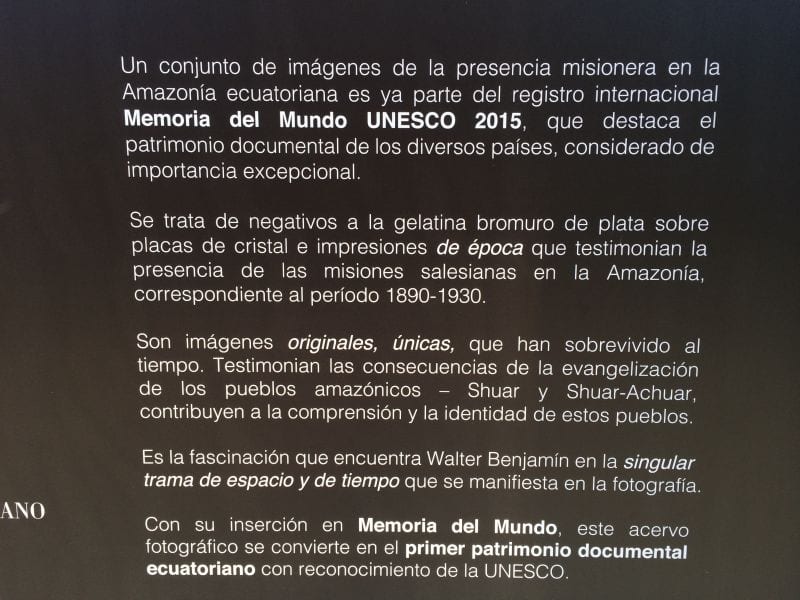
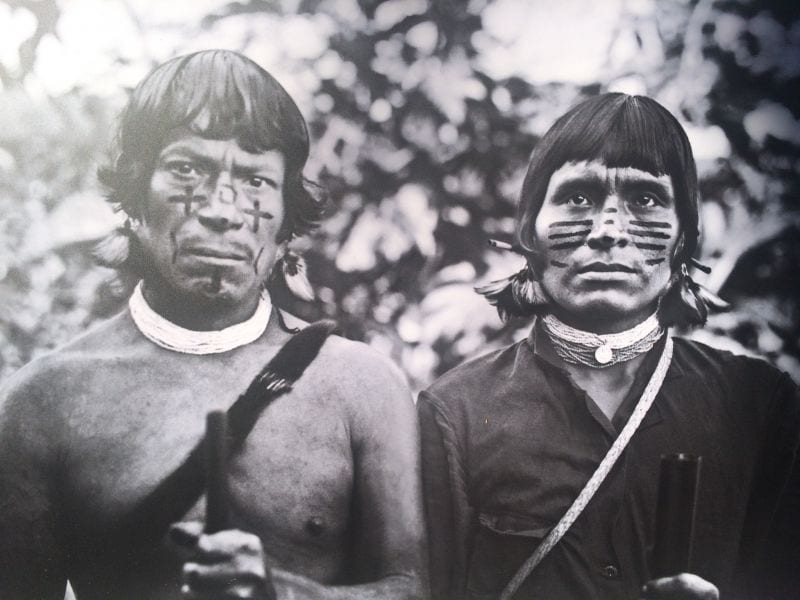
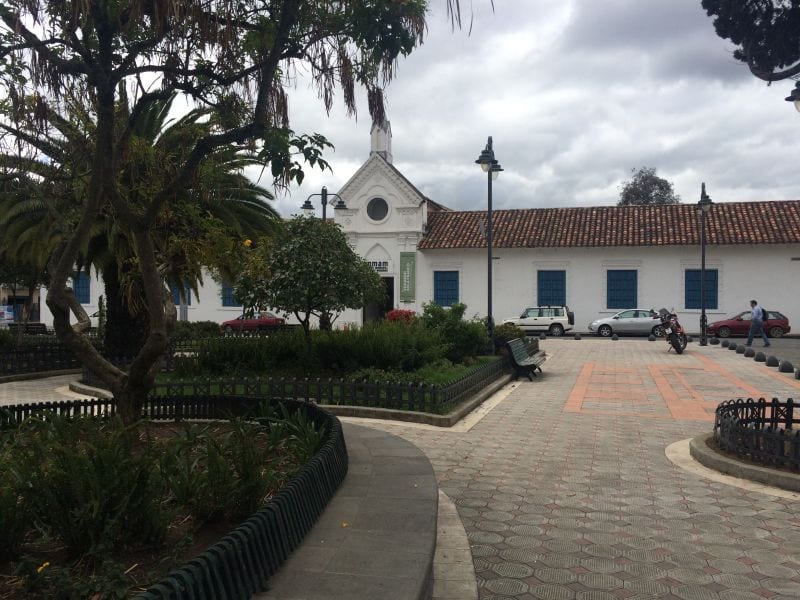
In Parque Calderone, these photographs were taken between 1890-1930. They are of indigenous Ecuadorian peoples in the Amazon.
Most show the native peoples in their Amazonian lifestyle and Spanish Catholic priests going about the business of conversion. Progress, it seems, moves people away from land and into cities, away from many God’s to one God, puts shoes on their feet, clothes on their back, and time into their consciousness.
The faces are startling. They are stern, piercing, resisting, fierce.
Descendants of these people still live in the jungle. Some drive ATV’s, have cell phones, and check e-mails. They also remember stories of old ways and, at dark, around a fire, gather in ceremonies to celebrate nature and spirits priests hide from.
How do you tell people their Gods are not Gods, without resistance?
Modern art is an oxymoron.
When you go to galleries and see ” modern ” art you are seeing art done by masters whose works have critical interest and investors fretting over value.
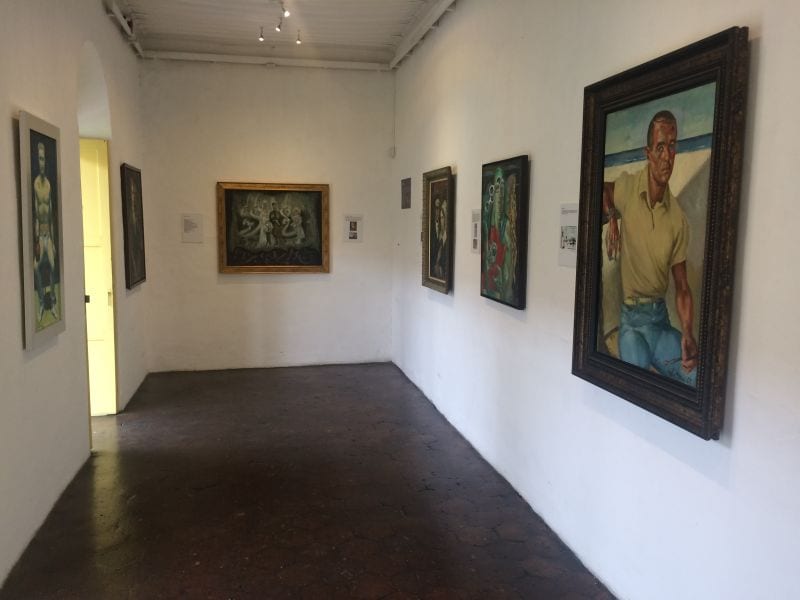
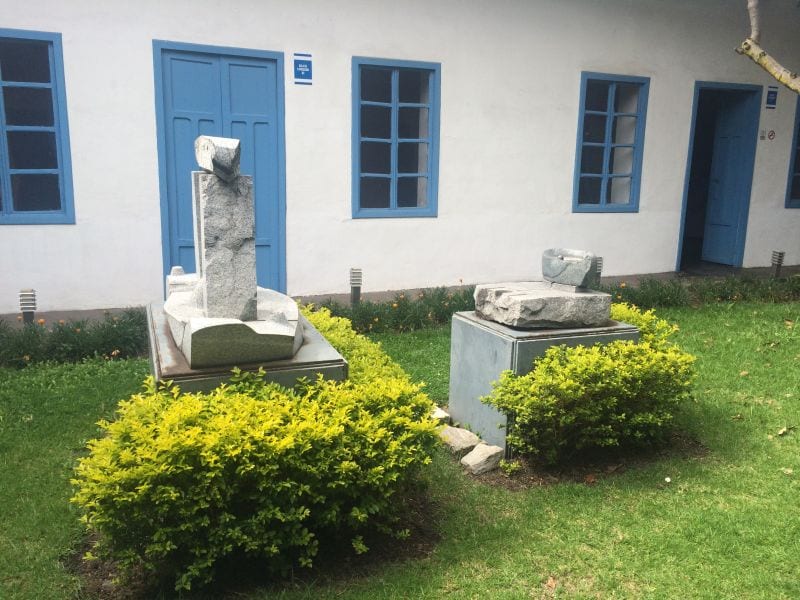
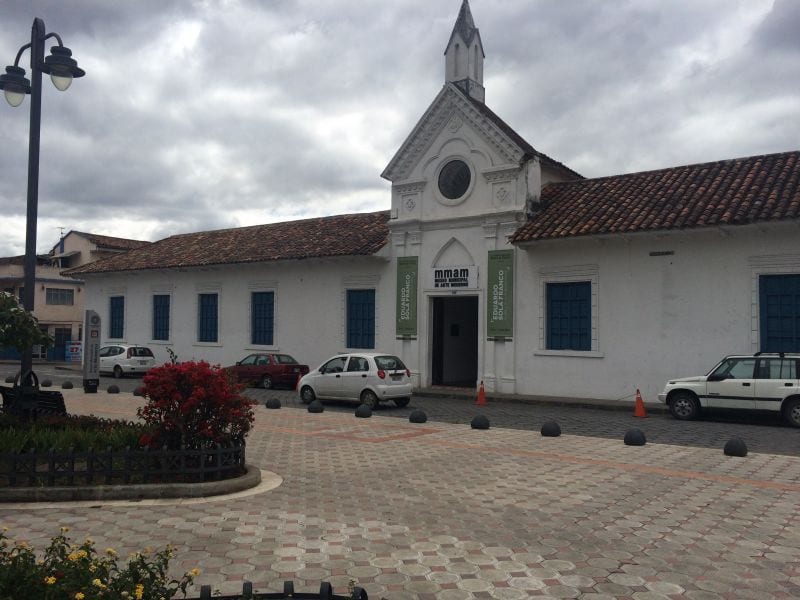
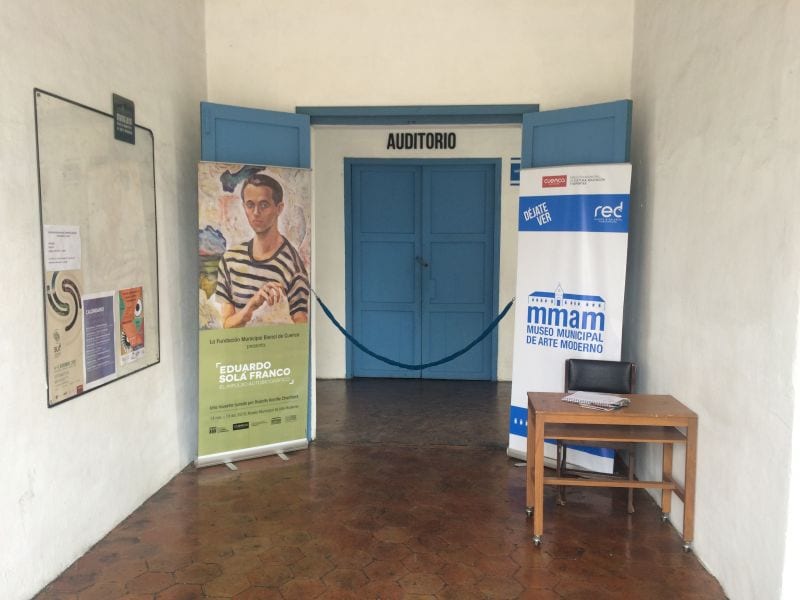
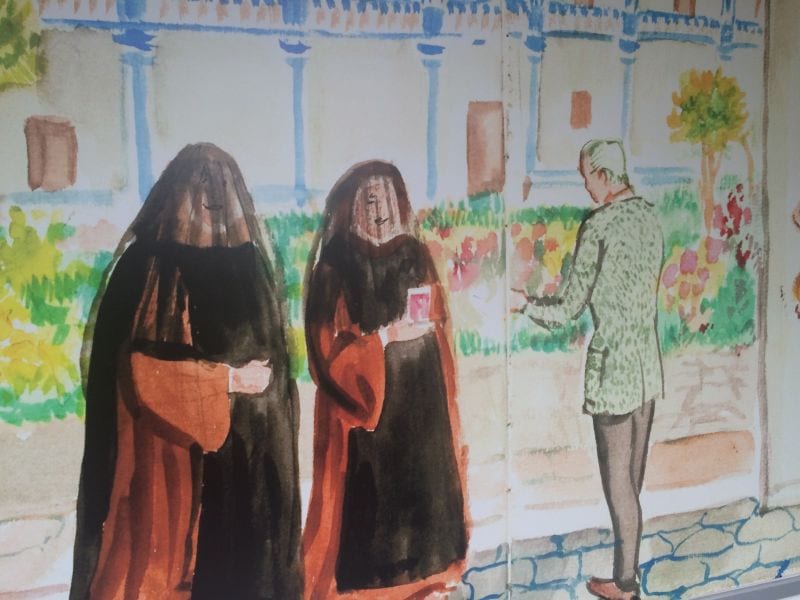
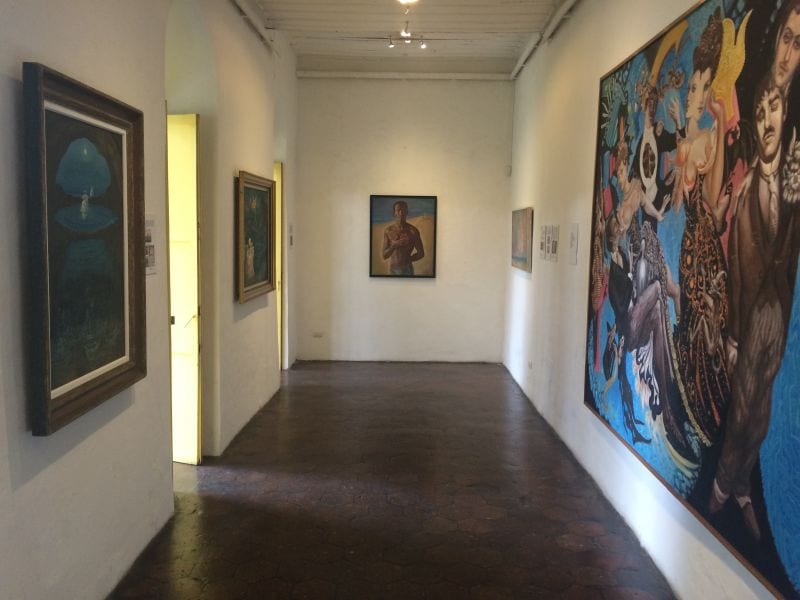
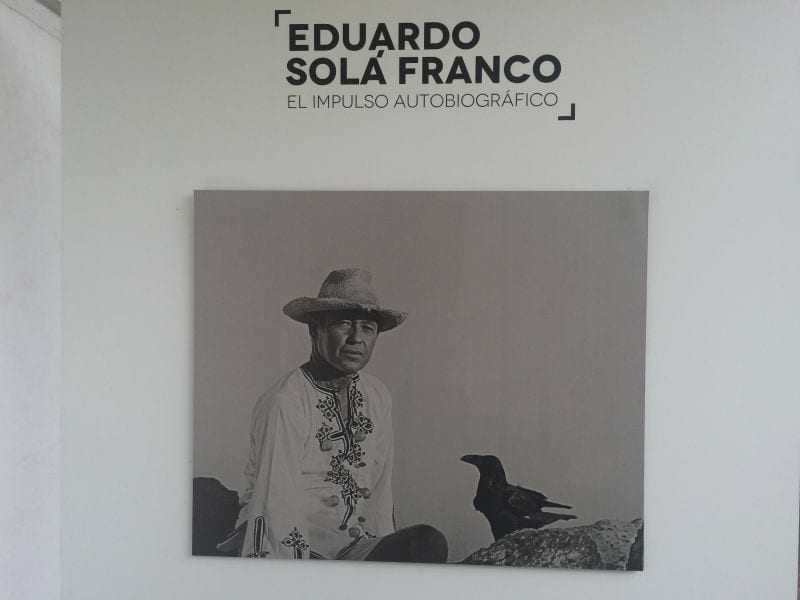
Modern Art in this gallery, this month, is Eduardo Sola Franco, an Ecuadorian native, who was not only a painter but a sculptor, stage set designer, illustrator, experimental film maker. He was born in 1915 and passed in the last few years.
This is a retrospective of some of his output, which is voluminous.
His art, like much Central and South American art, is conflicted, political, full of dark colors and religious symbolism. In America, we tend to keep spirits in their place, under the doormat. In South America, there is a rich tradition of giving spirits time in the spotlight.
Franco’s art is tormented but he has been identified as a Modern master of Ecuador, a non-conservative gay man captured in a conservative culture.
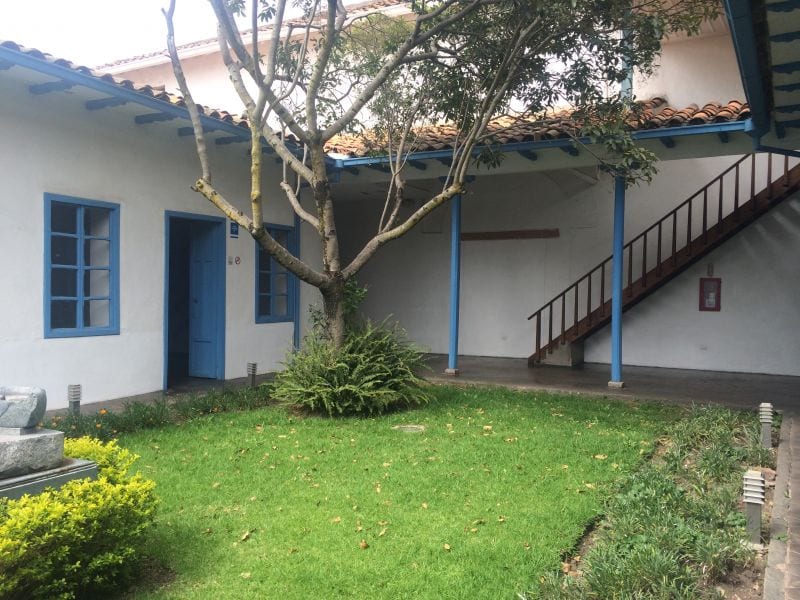
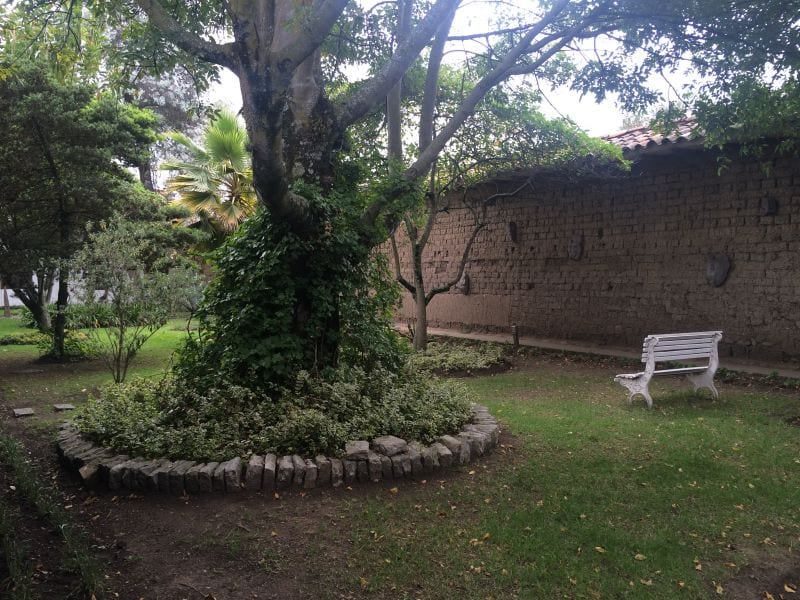
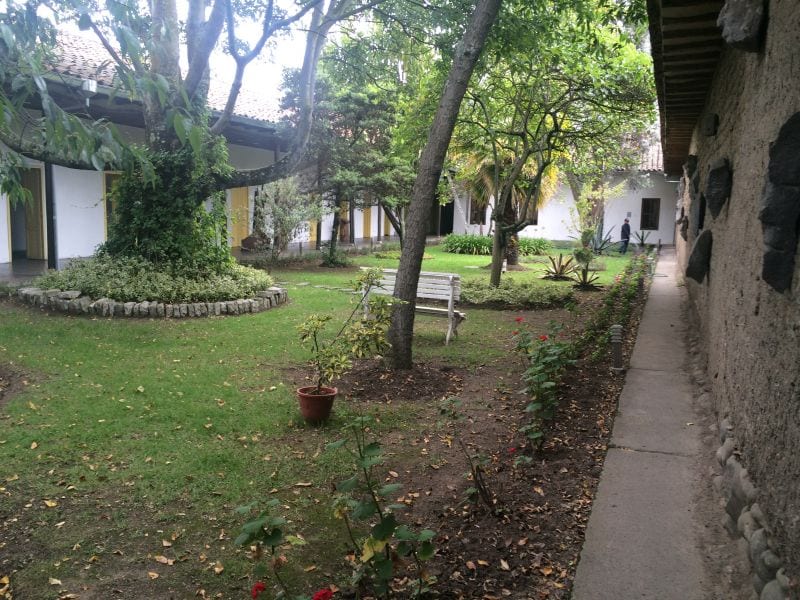
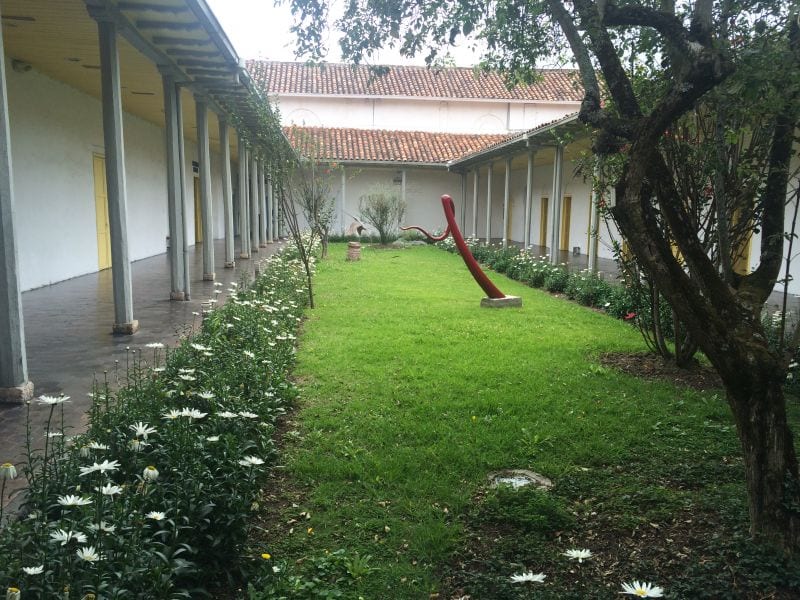
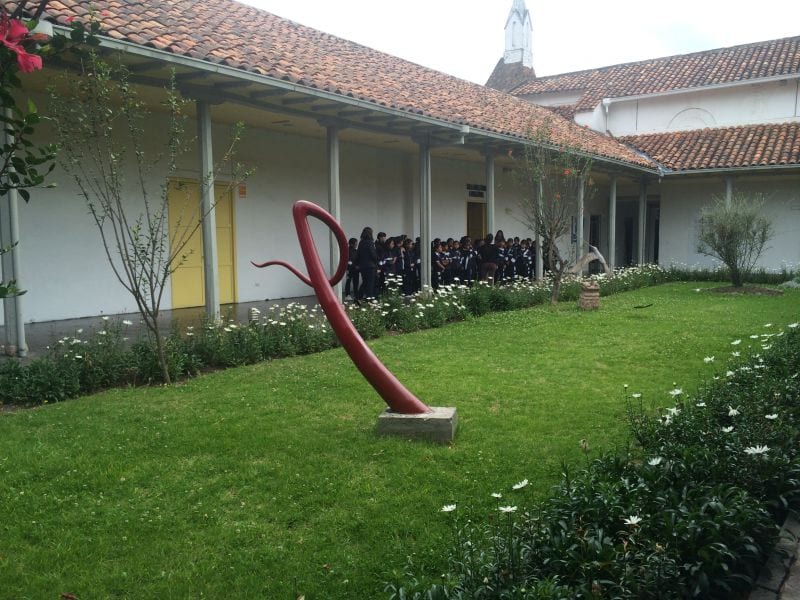
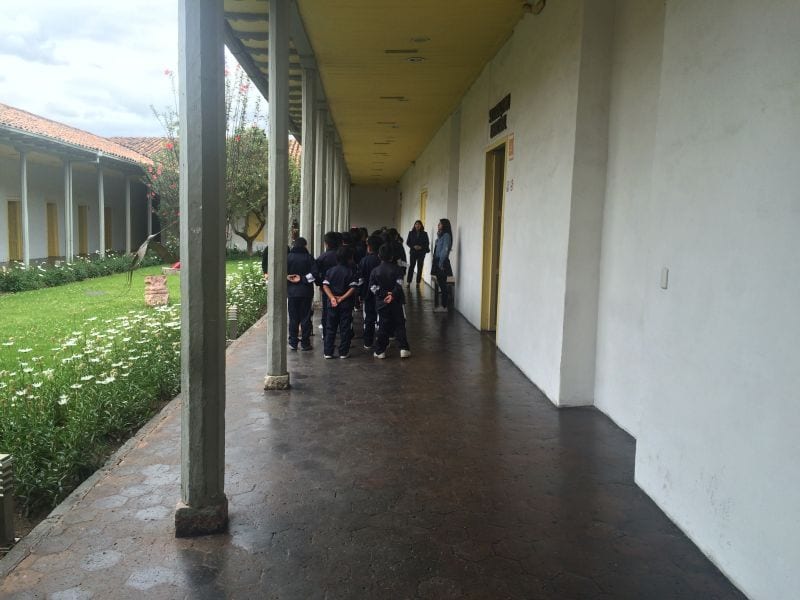
The Museum is quiet, free, with nice grounds, clean facilities, and bathrooms.
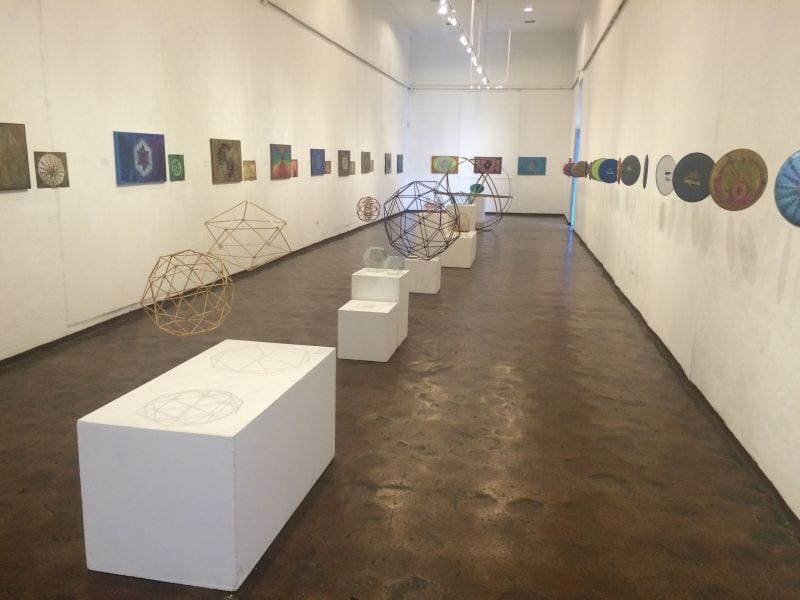
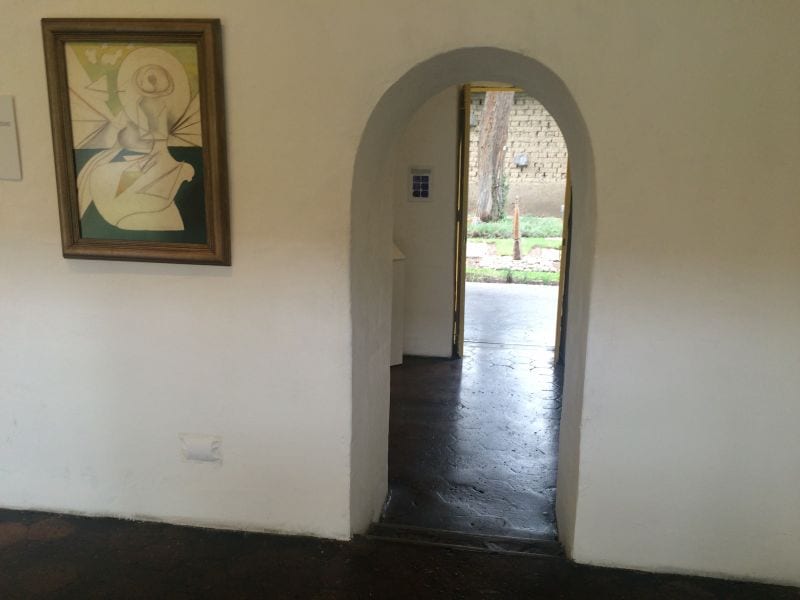
The art on the walls in this Contemporary Art Gallery is self absorbed,and, for this reason alone, completely of our time.
Plaza Otorongo is a popular meeting place.
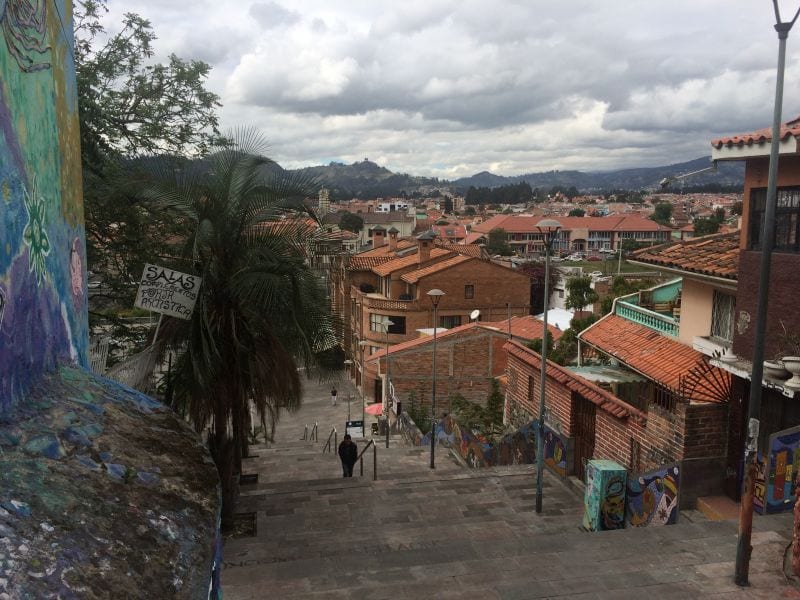
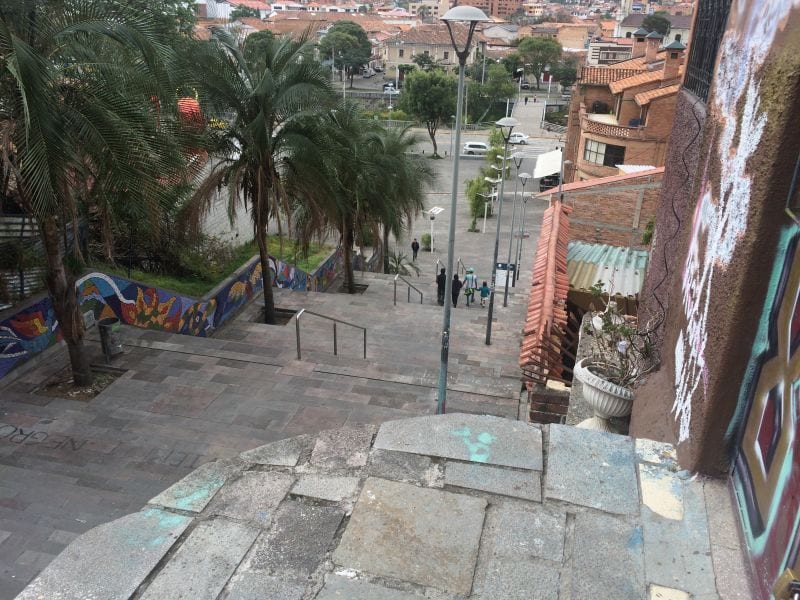
It is at the bottom of a huge hill near the Tomebamba river and one way to enter and leave the plaza is ascending or descending a long and steep stairway. Stairs are grouped in sections with five steps and a landing to each section. Going down is hard, but going up, at eight thousand feet above sea level, is stout.
The Plaza has restaurants, lodgings, a yoga and pilates studio, art gallery, and a huge open courtyard. Certain times of day students use these steps as a shortcut to go down to the Plaza and across the river to the University of Cuenca.
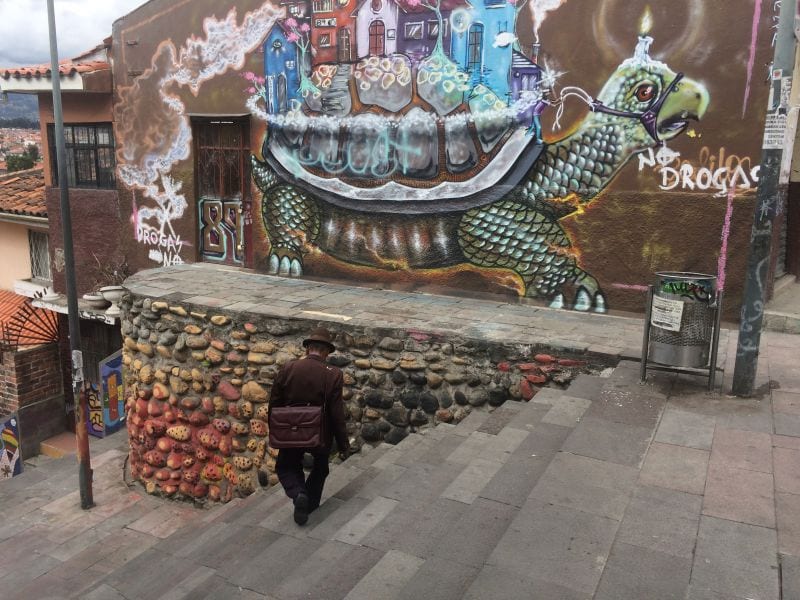
This morning a young man exits at the top of the stairs. An old man is going down, the way I came up, moving diagonally down the stairs so he doesn’t pitch forward and fall down.
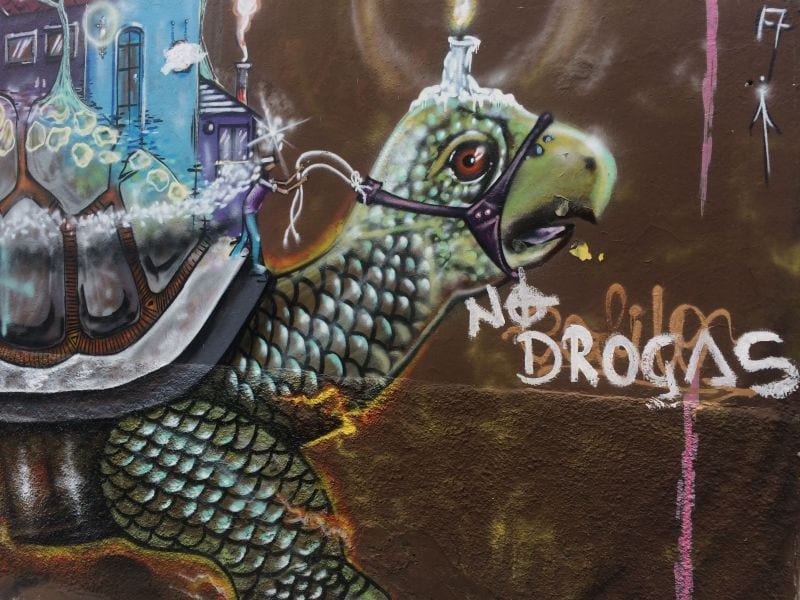
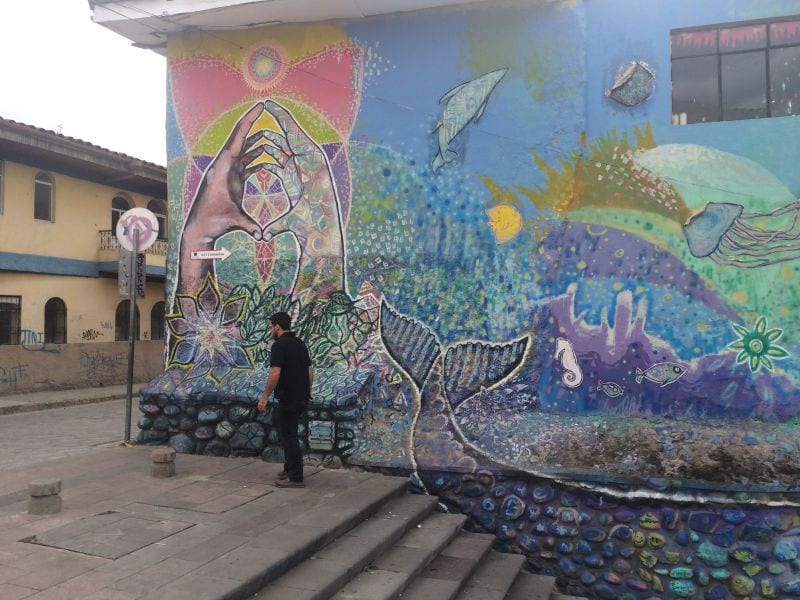
Street art reminds you that urban problems won’t disappear. Drugs, crime, deteriorating infrastructure, broken promises and broken dreams don’t go because we don’t like to see them. Street art is the safety cap on the tea kettle. If it is humming, you have to take a closer look at the fire.
Cuenca, for all it’s Old World charm, has New World pain..
Cities, like rivers, always have dangerous cross currents.

Recent Comments