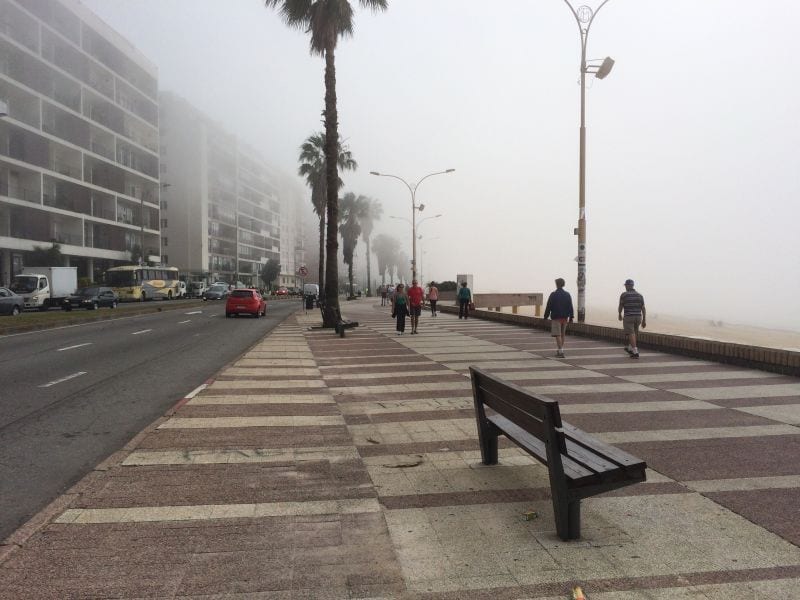
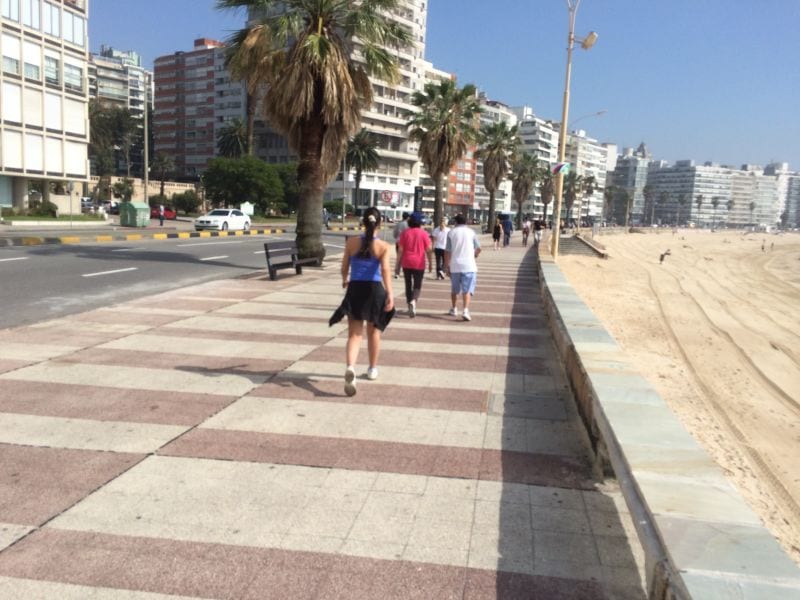
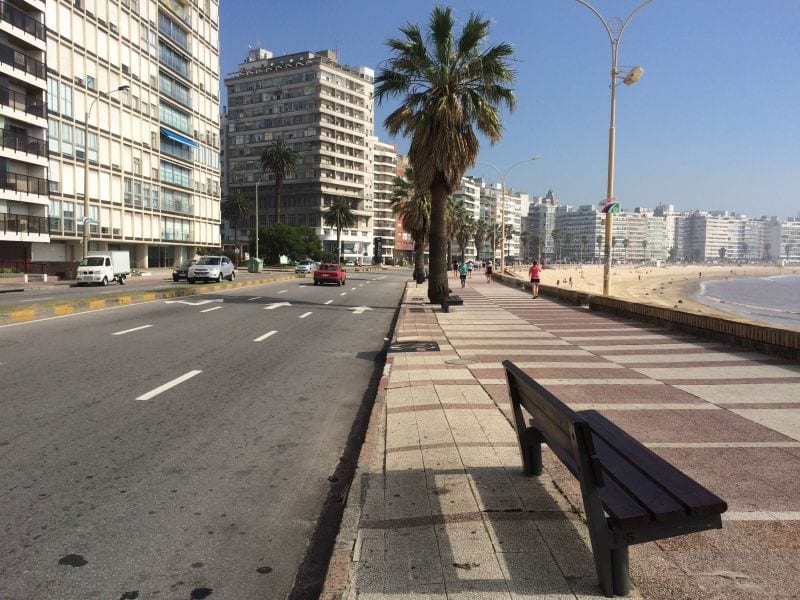
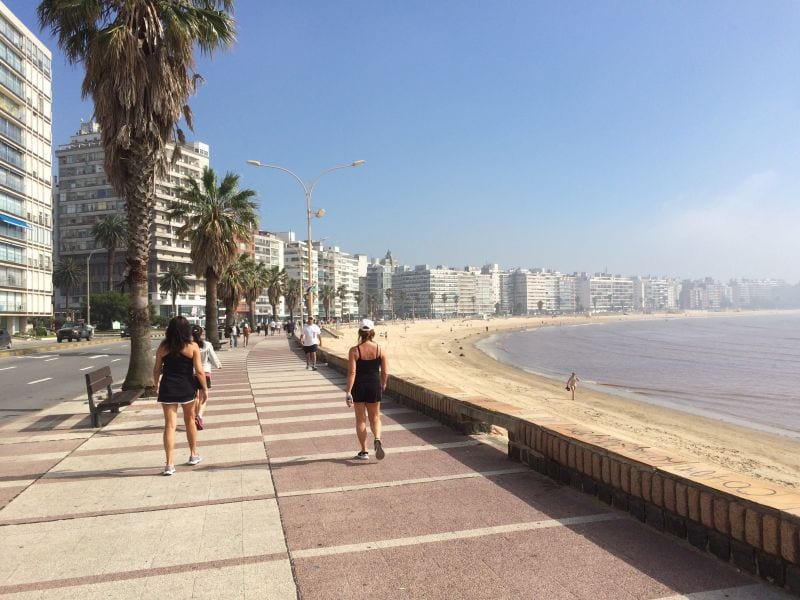
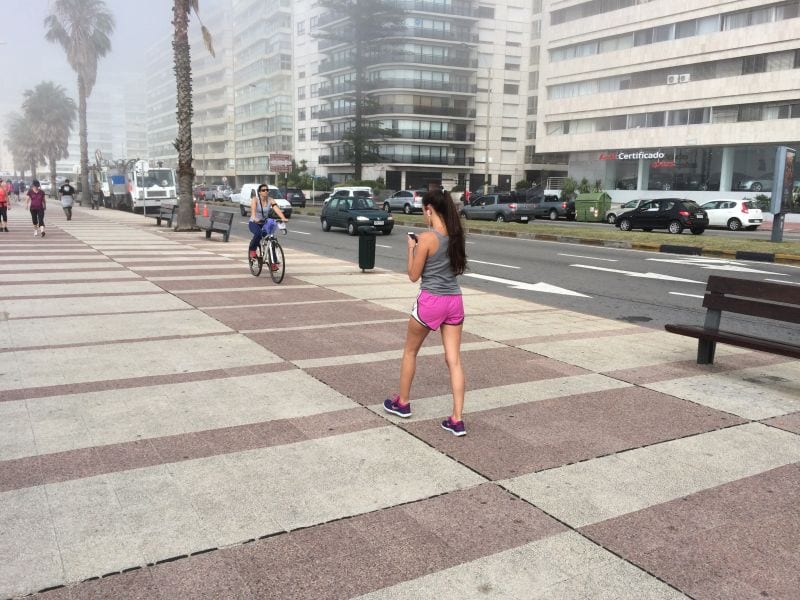
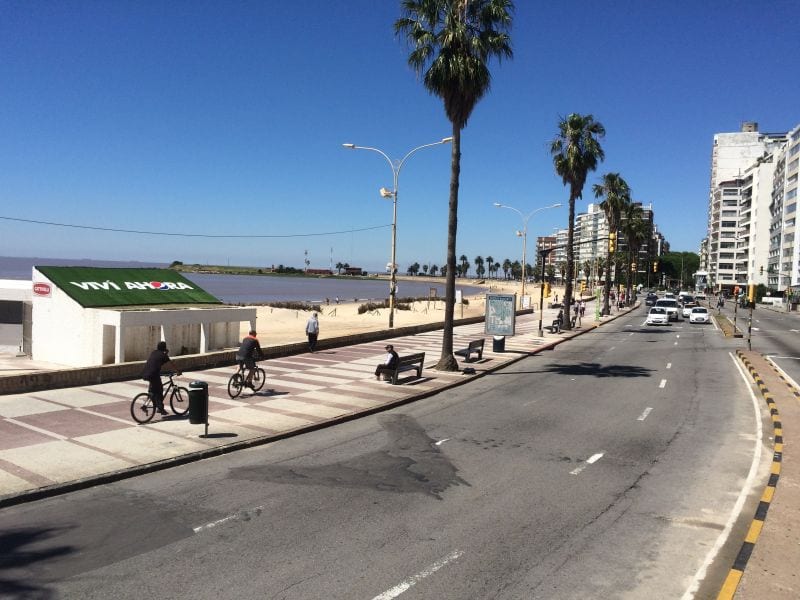
The Rambla is a paved course way that runs from Ciudad Vieja to Pocitos and beyond.
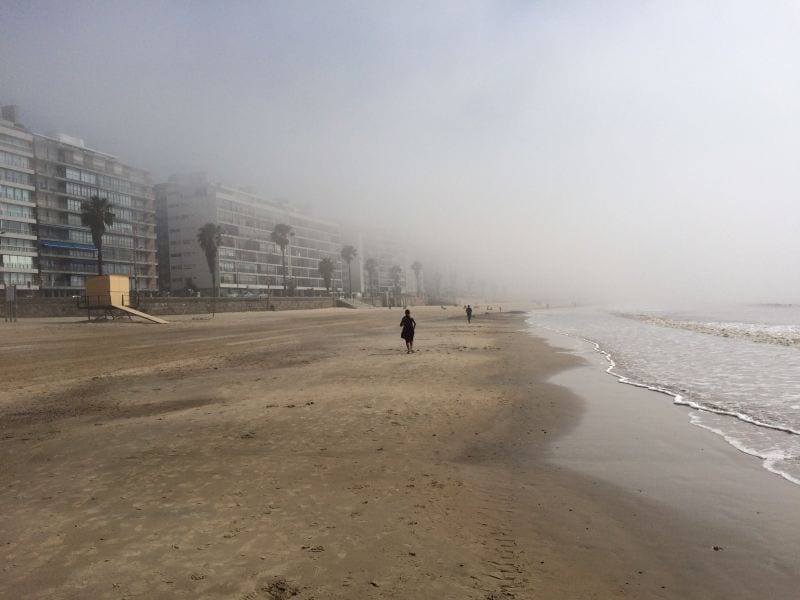
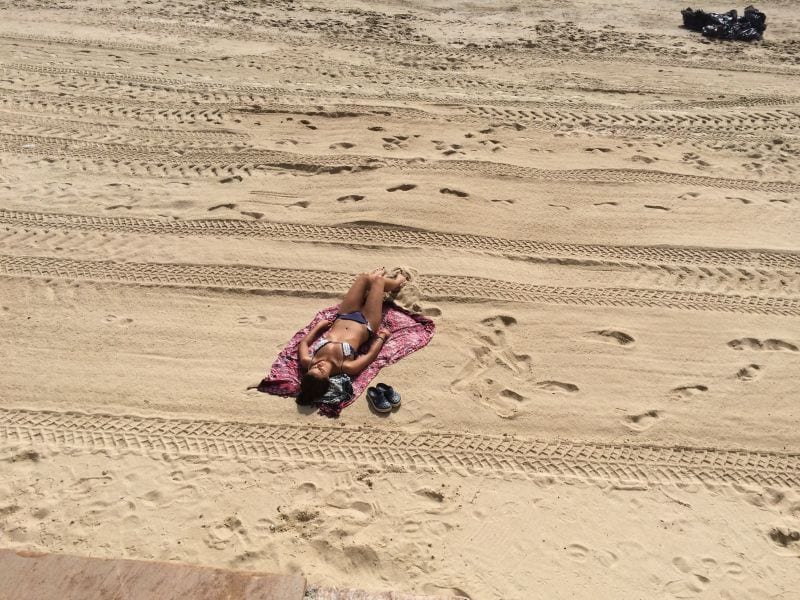
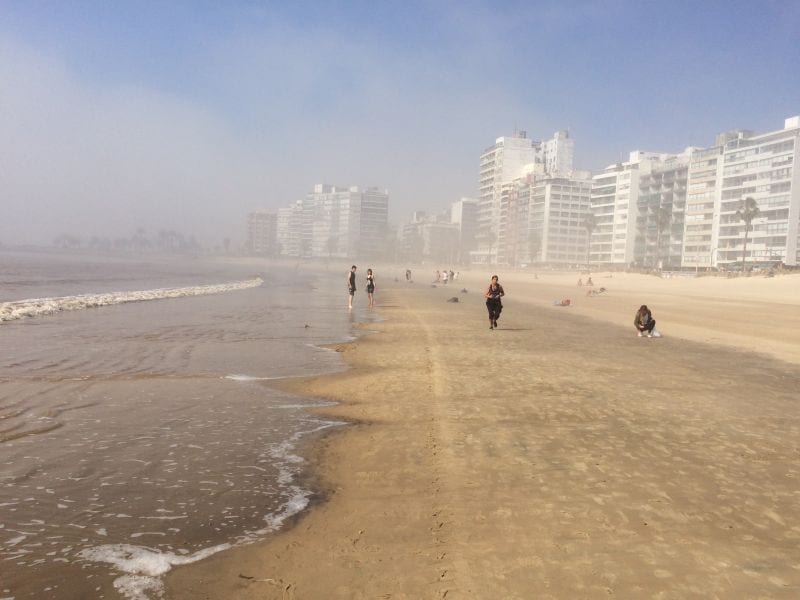
It runs along the sea where humans go to walk and talk, show themselves off to the world, build sand castles on the beach. There are animals, bike riders, skateboarders, old couples, young families, and tourists strolling and playing here this morning.
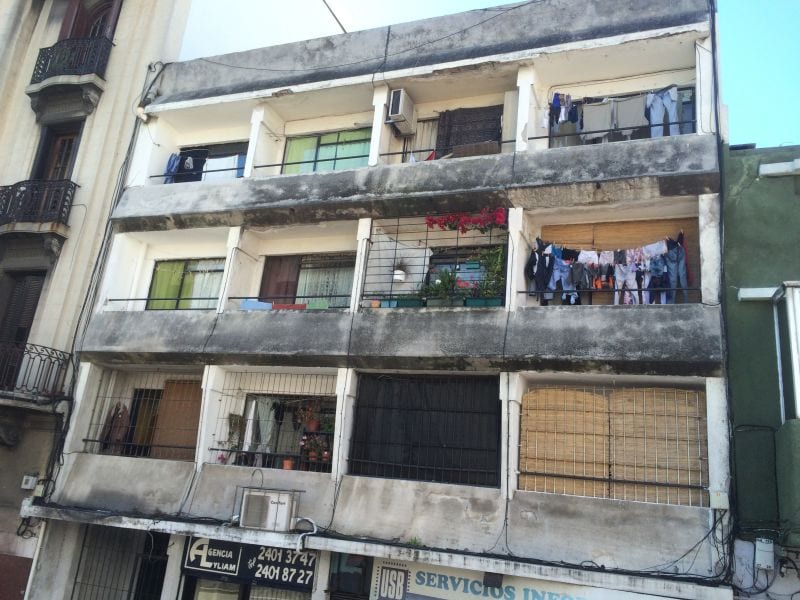
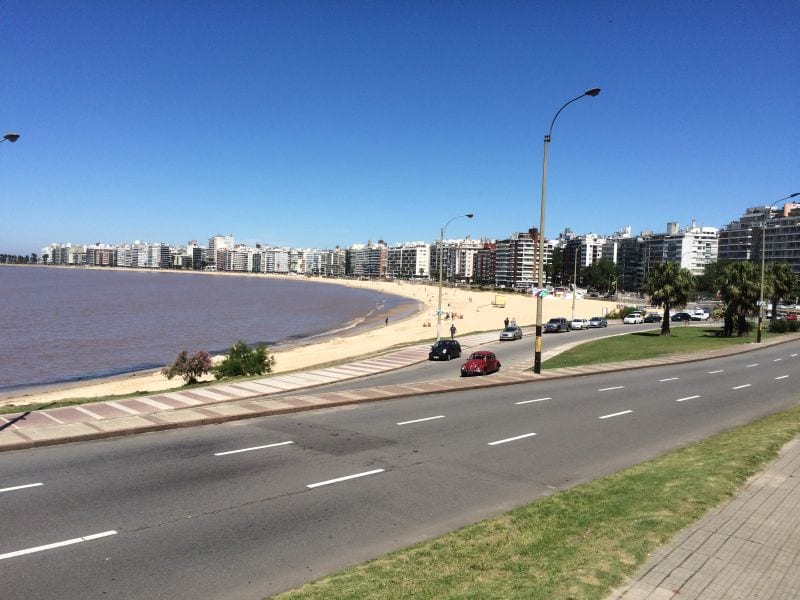
Buildings along the beach in Pocitos are unimaginative as if beaches all over the world have been given up to developers who see things only in cost per square foot and know instinctively that boxes are the cheapest and quickest geometric forms to build.
A dog chases a Frisbee thrown for him onto the incoming waves.
When he comes out of the sea, he brings his Frisbee back to his human companion and refuses to let go of it, shaking his head and keeping the toy from an outstretched hand.
His human wrestles the Frisbee out of his dog’s mouth and then throws it back into the surf. to keep the game going. The dog chases it again, happy as a clam.
Dogs have a good handle on what they need.
Getting your master to love you is their ultimate prize and catching and bringing back a frisbee seems a small price to pay for love.
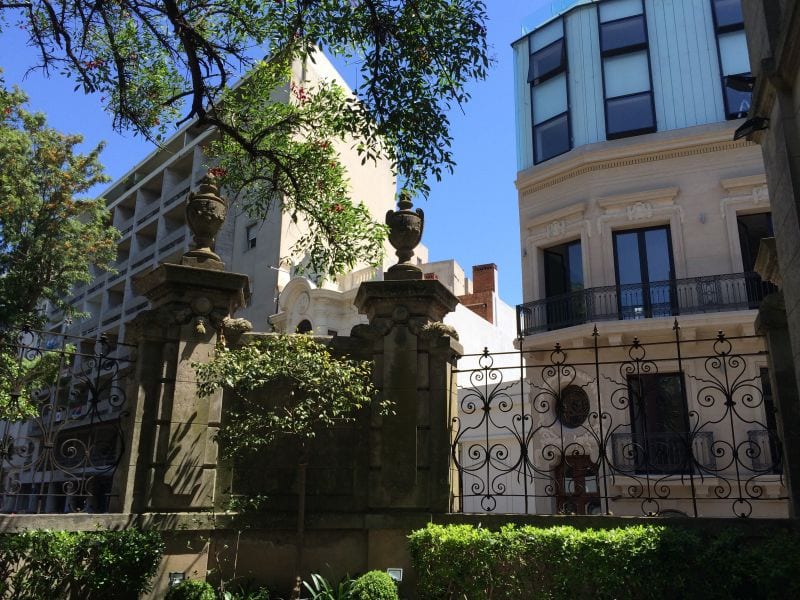
The Palacio is, by the map, located in the heart of the Old City.
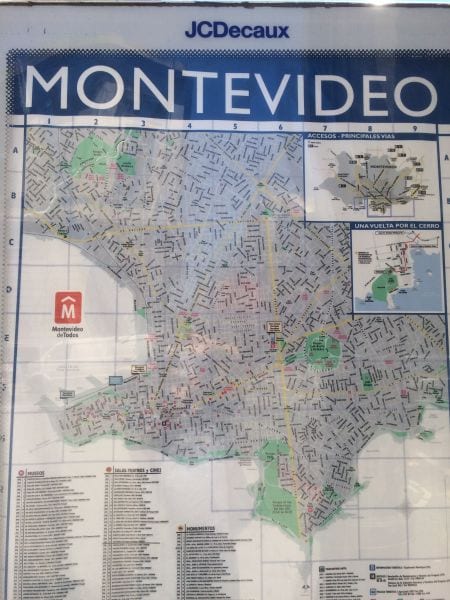
If you look at a map of Montevideo you see at least thirty points of interest in Ciudad Vieja and fewer as you move outward towards other barrios; Centro, Barrio Sur, Palermo, Aguada, Punta Carretas, Tres Cruces, Pocitos.
The dividing lines between the barrios are clearly defined but neighborhoods change as people move into them, establish themselves, then sell out and move to even more exclusive neighborhoods. Still, the Old City is a place to be if you are a lover of museums, architecture, and bustle.
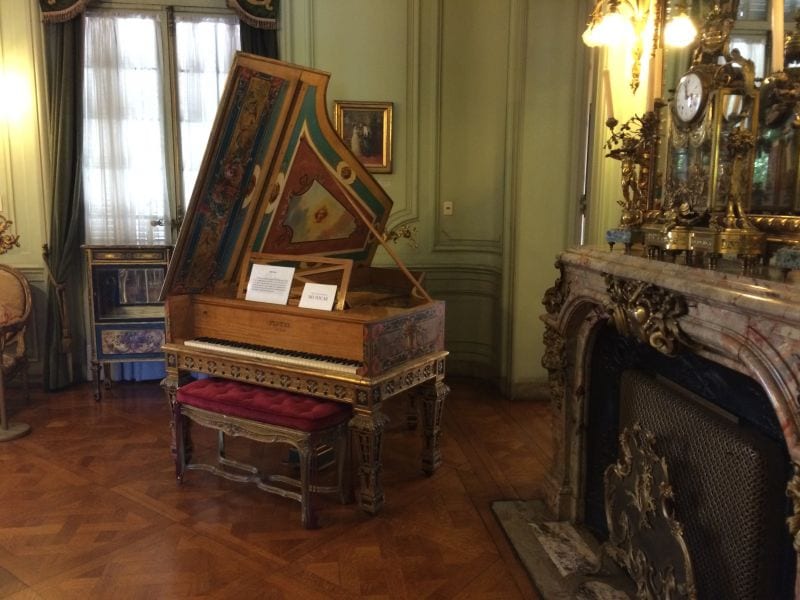
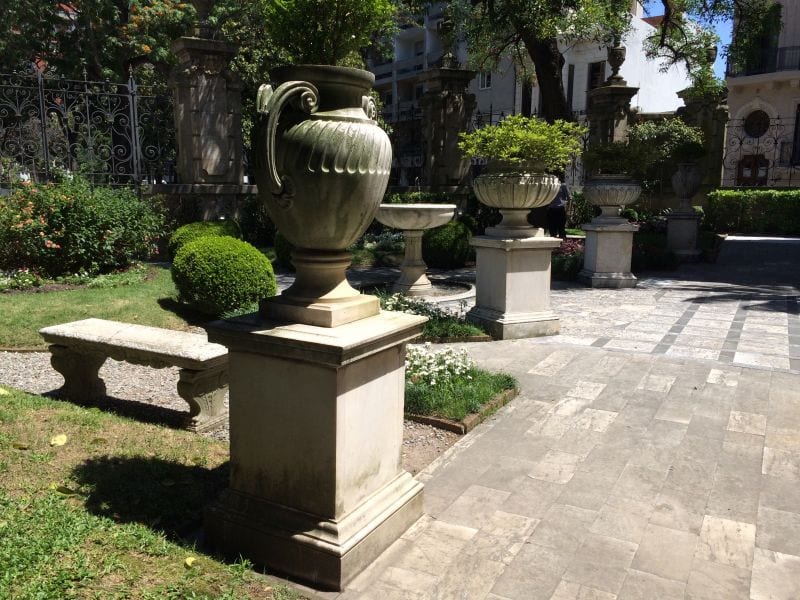
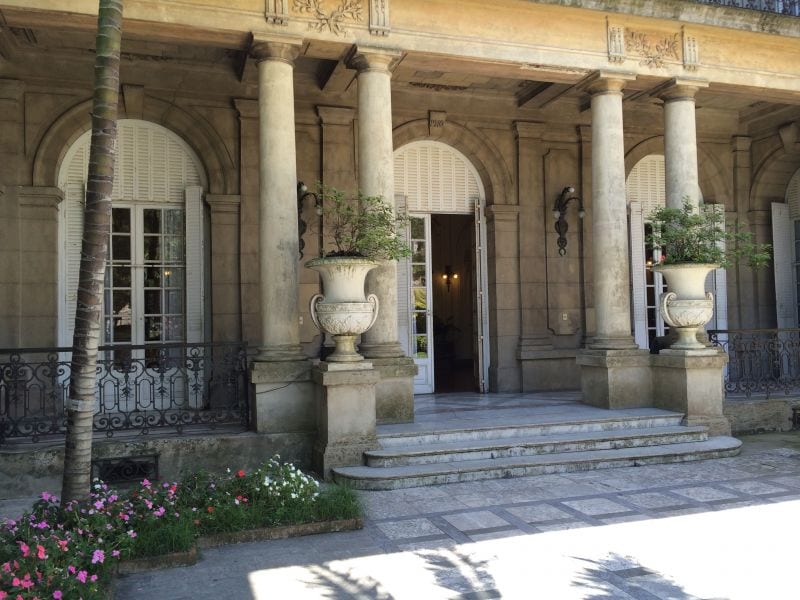
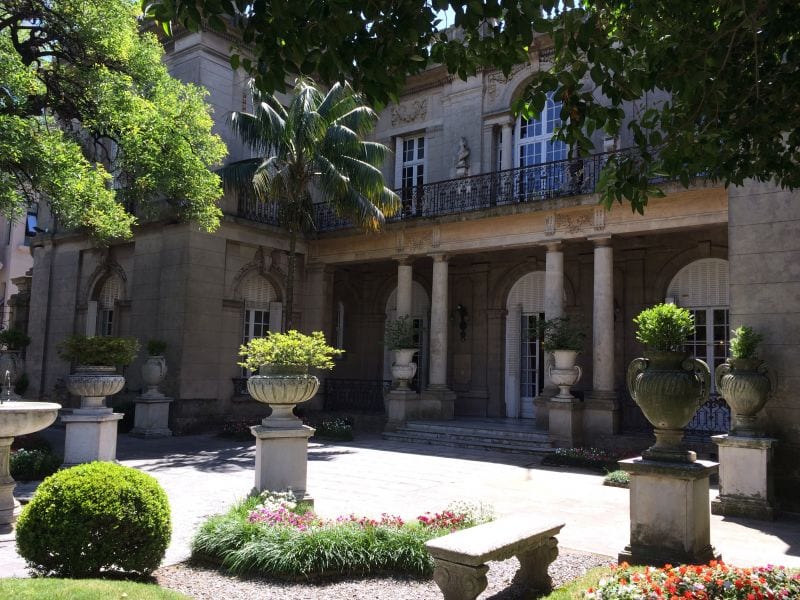
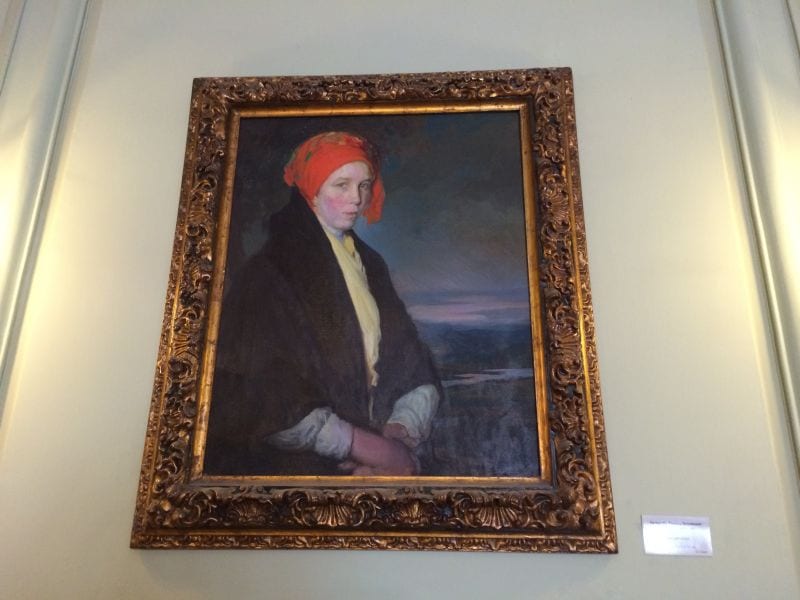
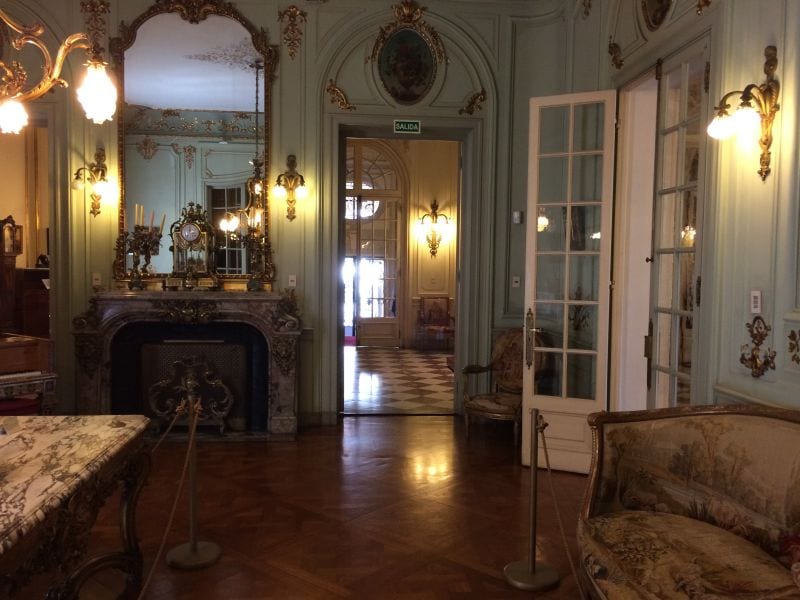
The Palacio Taranco was created in the early 1900’s for a wealthy commercial businessman who came to Uruguay from Spain.
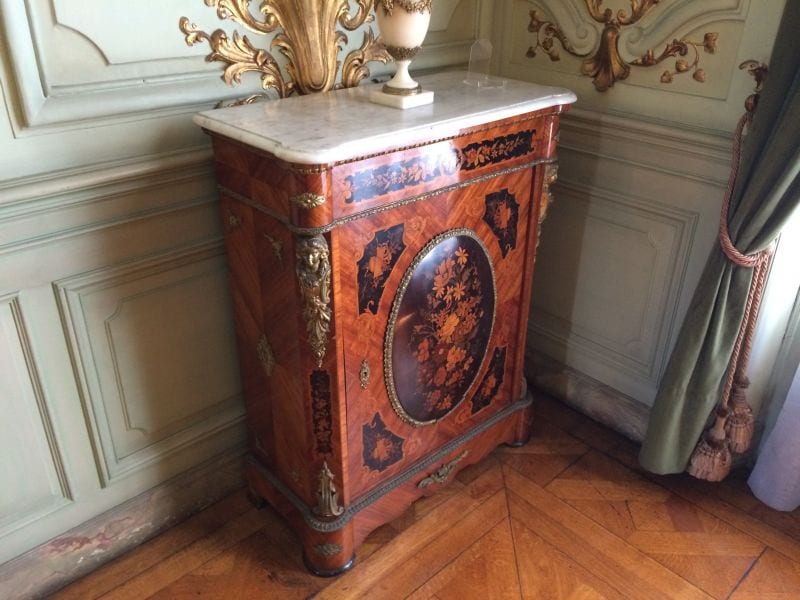
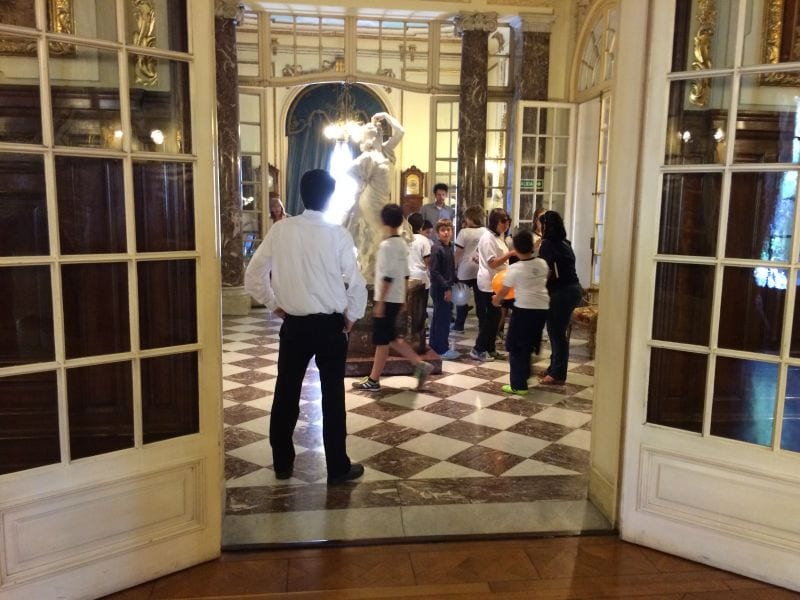
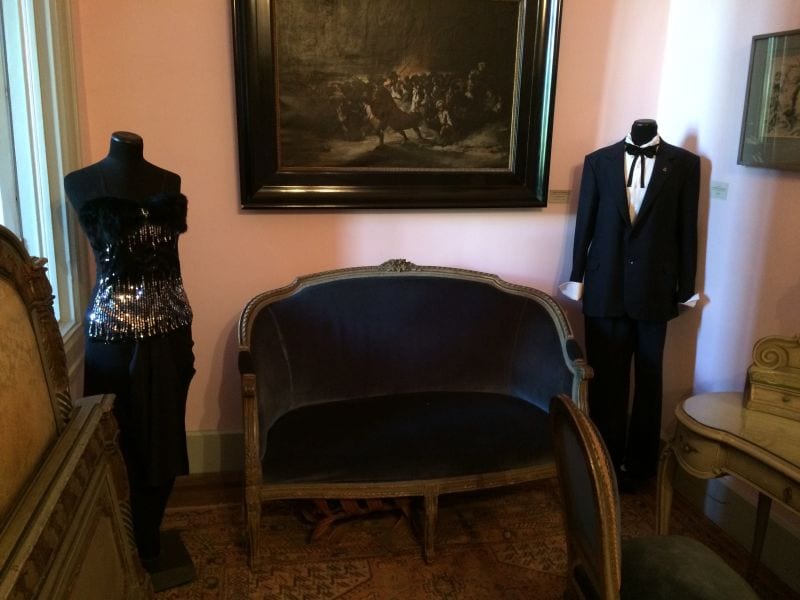
Designed by a well known architect of his day, Mr. Taranco’s Palace has high ceilings, fireplaces in every room, large windows that let in light when shutters are open, European tapestries, art, and hand crafted furnishings. These palaces always have libraries and pianos, sitting rooms and gardens. To walk in them you would think the owners were artists instead of businessmen.
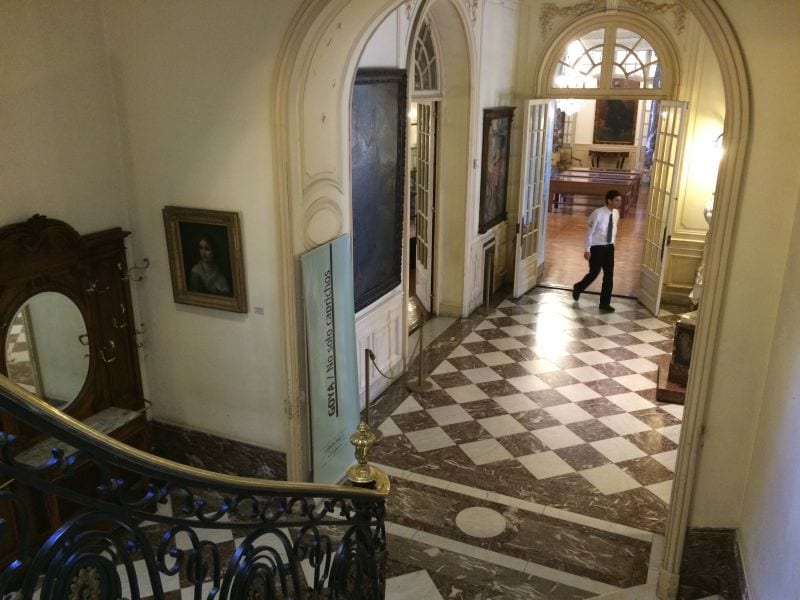
A young lady at the information desk explains that this Palace was a family home and has been donated to the city. There are no charges to browse.
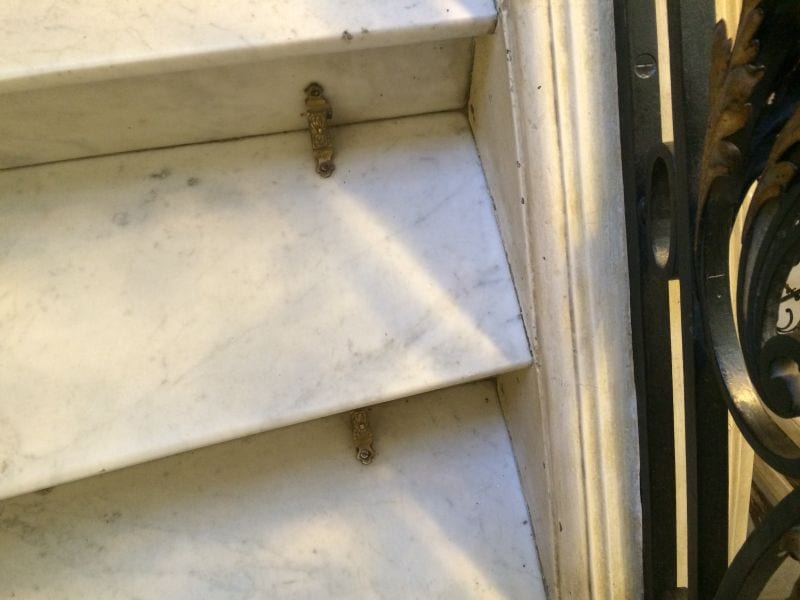
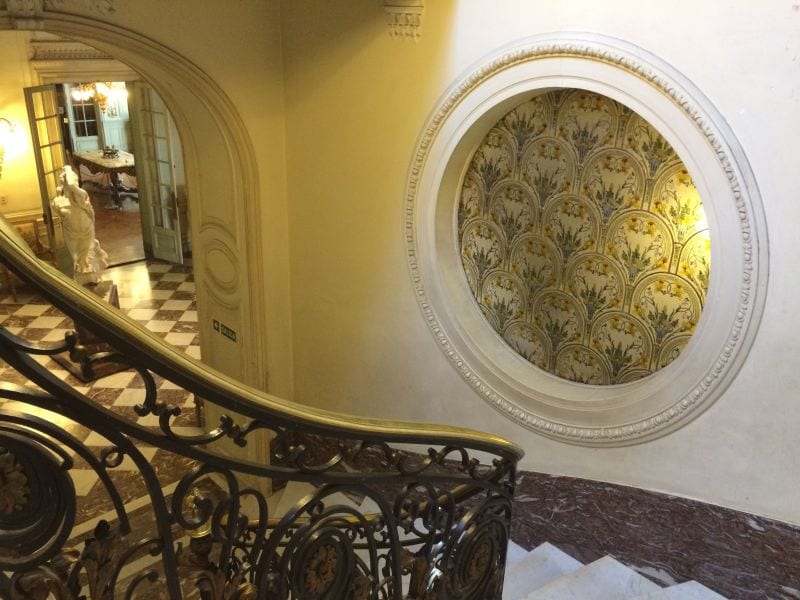
Going up a marble staircase to the second floor, I am moved back to an era when Montevideo was moving from horses and carriages to automobiles, and music was moving from ragtime to big band swing.
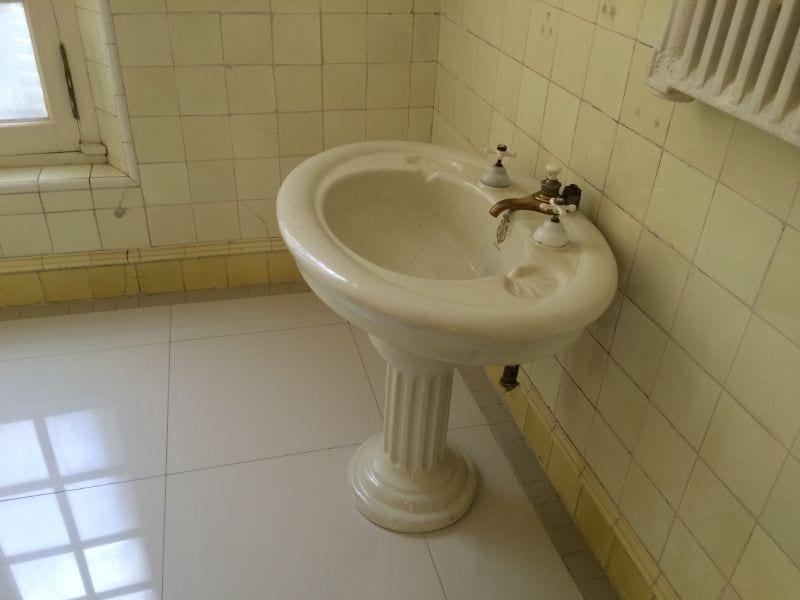
The Palacio is a step back in time and though the family that made this place a home has moved on to a more ethereal neighborhood, it appears they lived a comfortable life.
Living rich and being rich are not always two sides of the same coin.
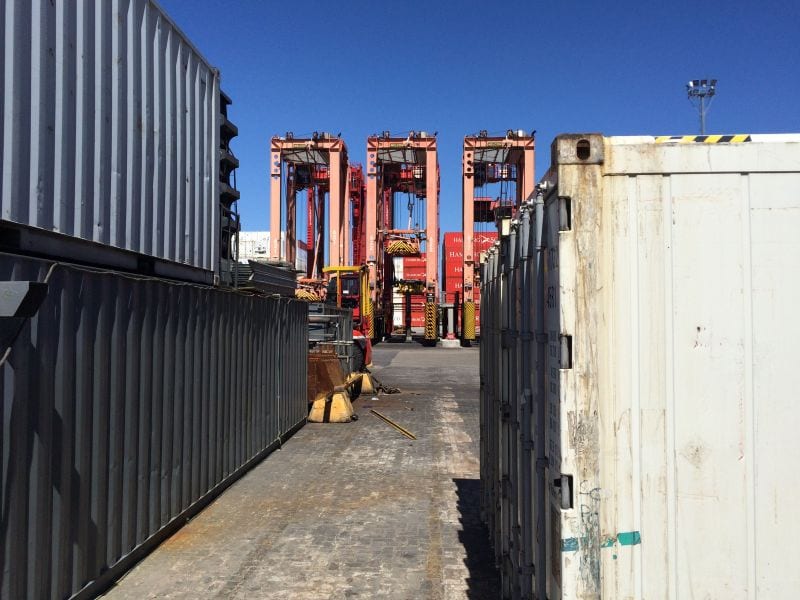
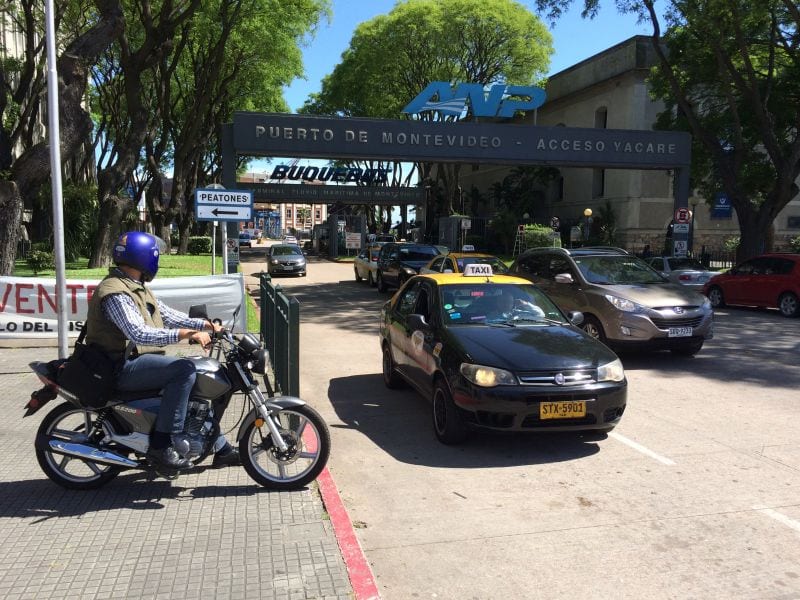
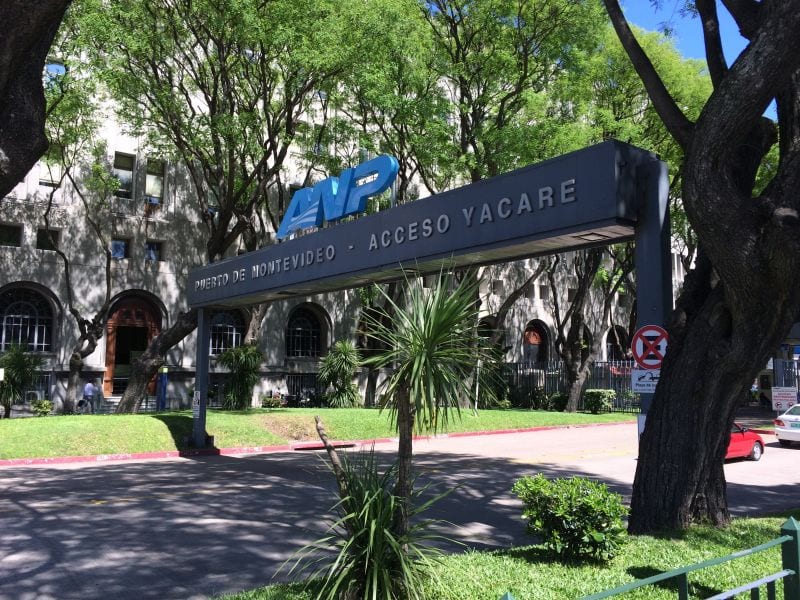
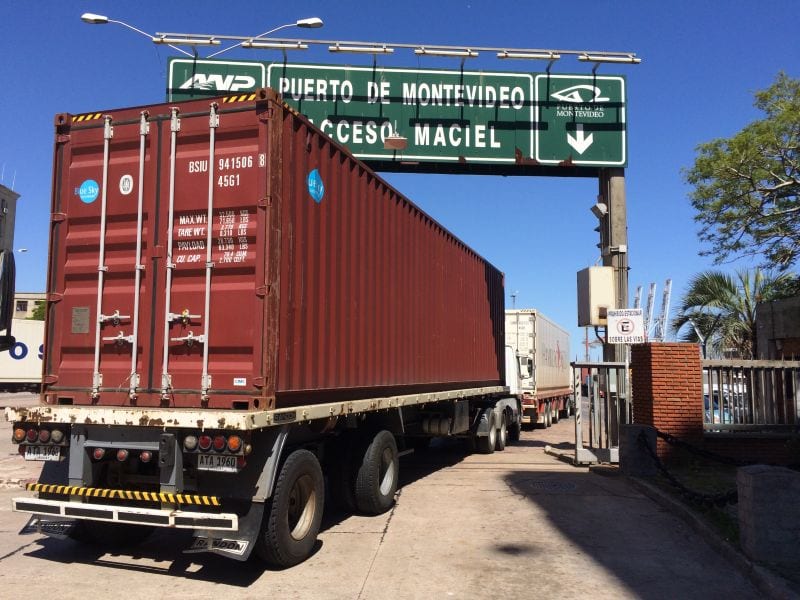
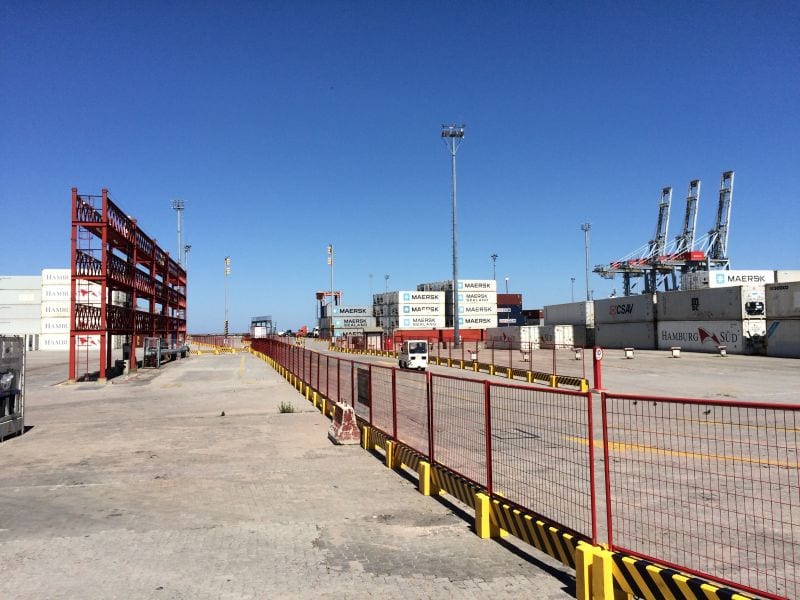
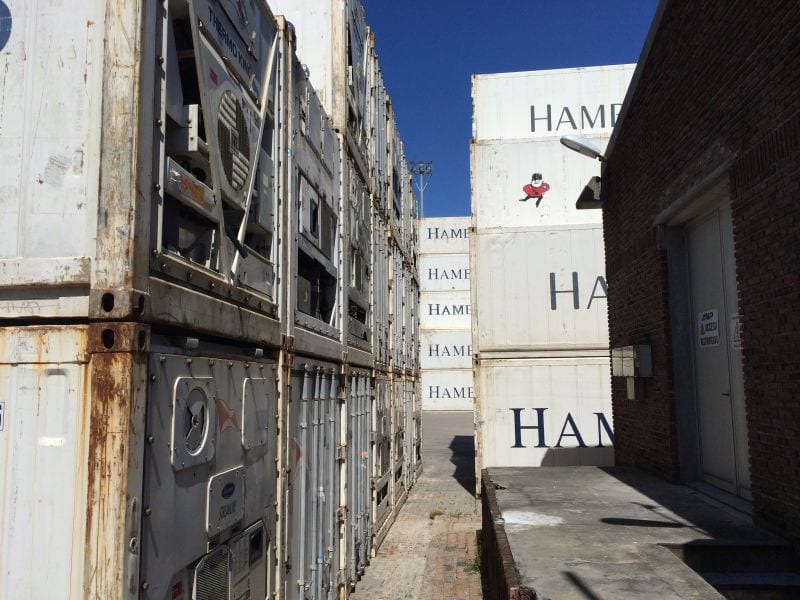
The Port reminds me of a toy box in a giant’s kid’s room.
It is walled off from the public with a tall iron fence and each of its entrances is protected by security guards who don’t want people entering without proper credentials. Along the fence’s length you watch big forklifts, big trucks, big containers, big projects, big ships. I am looking for a ferry that can take me to Buenos Aires in a week, doing investigative work before things actually happen. When you don’t speak even grammar school Spanish you need all the time you can to get your passport in order, get your times and tickets, get where you are supposed to be figured out.
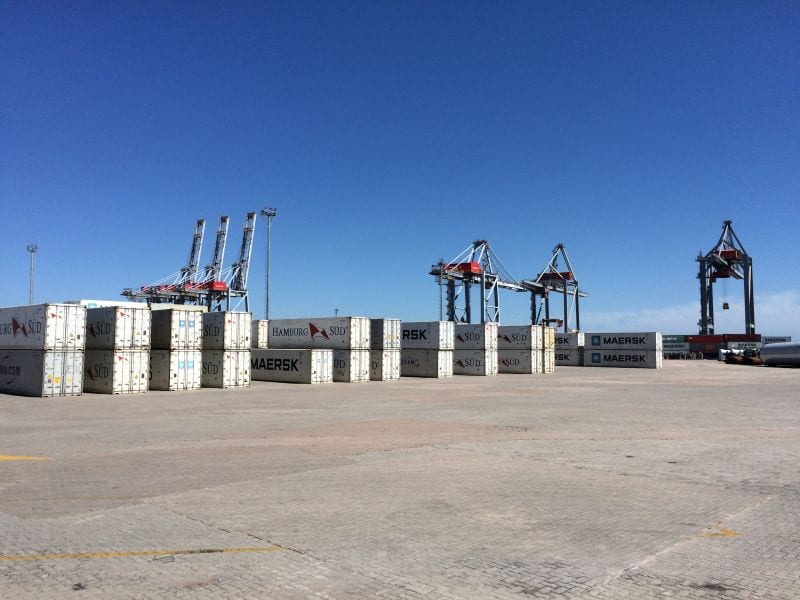
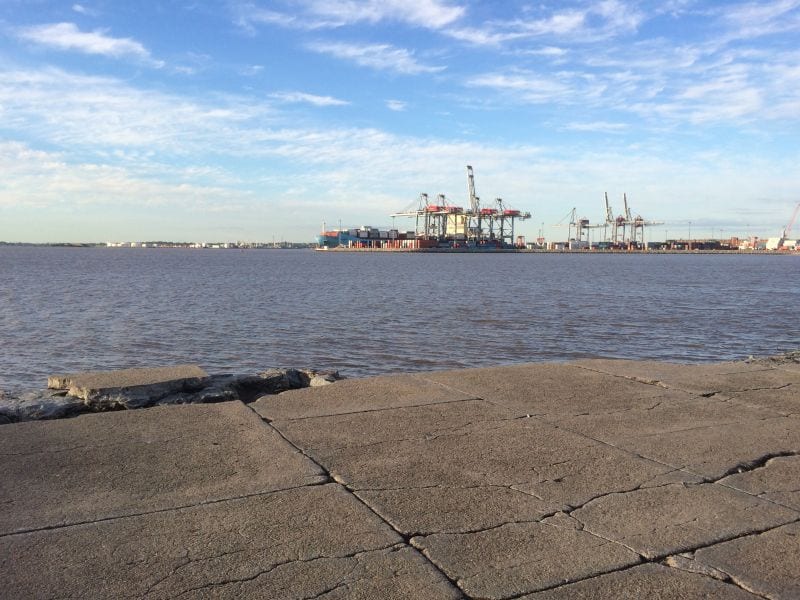
The Port is full of shipping containers that are lifted out of massive ships, one at a time, with huge cranes and huge magnets. A crane operator swings his crane into position, lowers a magnet, lifts a container out of its ships hold and gently swings it back over tarmac into a receiving area where men with pencils and notepads keep count.
Separate from the Port ( where you can’t go without authorization), is a ferry called the Burquebus. This is where cars and people catch a boat ride going twice a day to Argentina.
When I get to the front desk at Burguebus I ask about the trip and a lady points to one of her co-workers and says “Ingles.” That means he is the one that takes care of Americans and other non-Spanish speakers.
“Do you have your Argentina Visa?” the bearded young man with wire rim glasses asks?
It turns out, that to enter Argentina, Americans have to buy a 10 year special Argentinian VISA for $200.00 U.S. You can go on line and complete the application and pay for it, then print it out as proof before you board.
At this moment I know this is more trouble and money than I want to endure. It is going to cost more to visit Argentina for a day than it is for a bus to Punta Del Este and a hotel room for a week.
I call and cancel my bed and breakfast in Buenos Aires.
It is hard to run a business when politics runs off your customers.
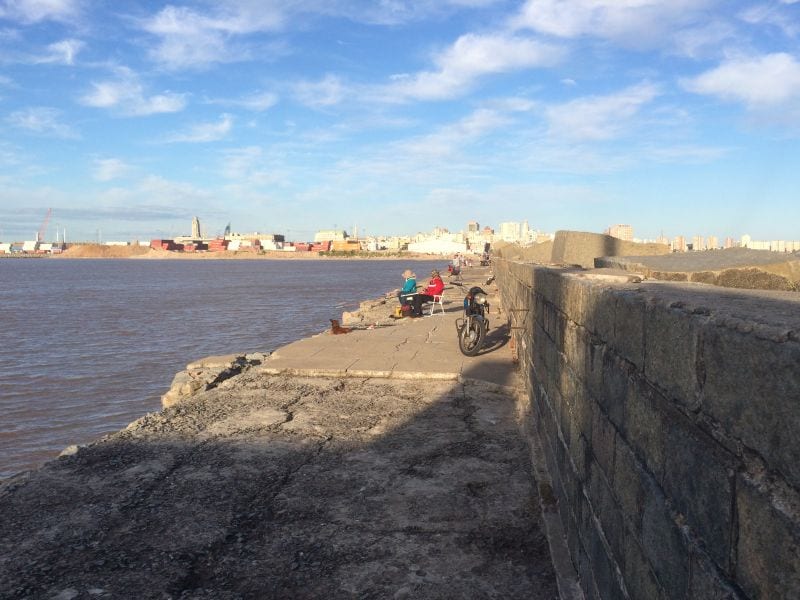
One evening, as the sun is falling, it makes sense to stroll down to the water’s edge, follow a concrete pier that juts into the water like the end of a fishing pole left discarded by a disgruntled fisherman.
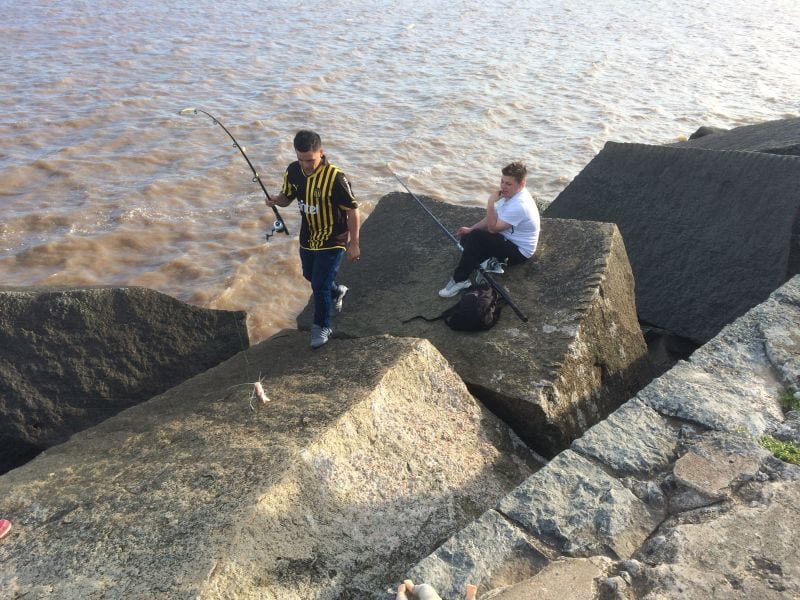
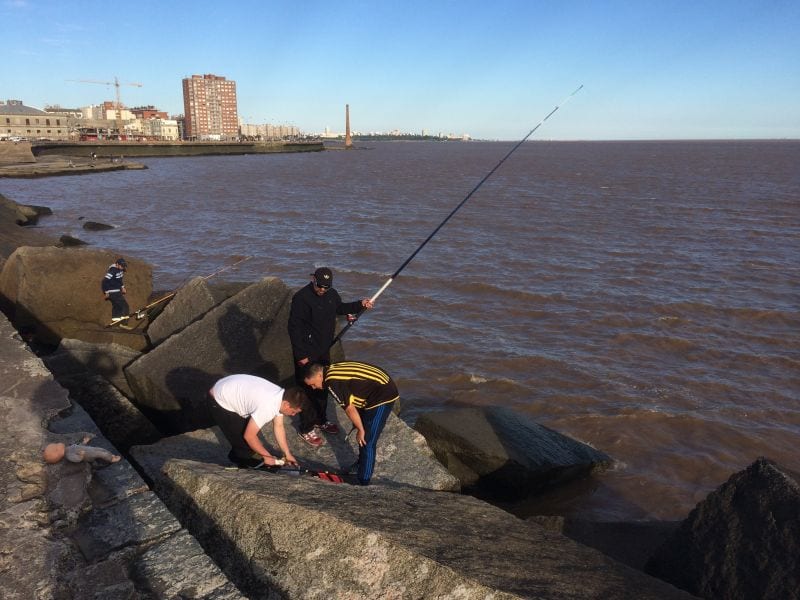
The pier is edged with giant stones and this is where fishermen and fisherwomen stand and cast out bait to try their luck.
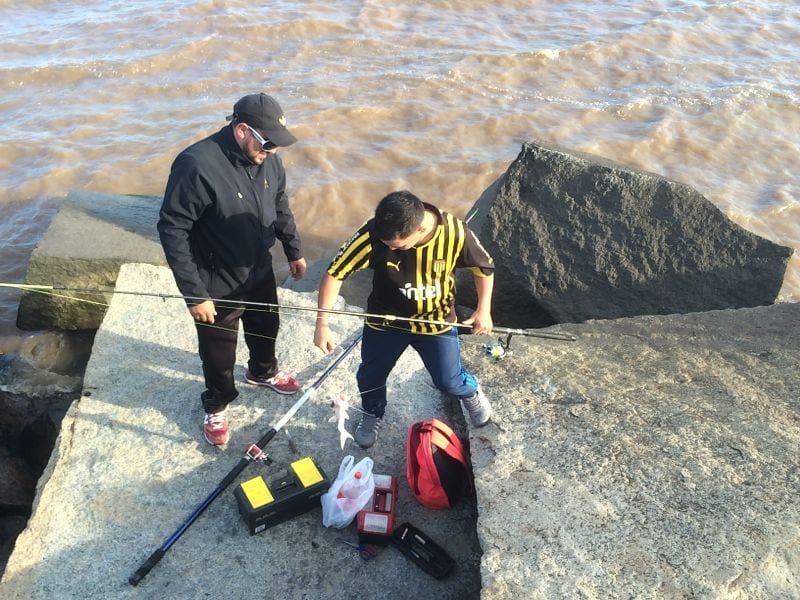
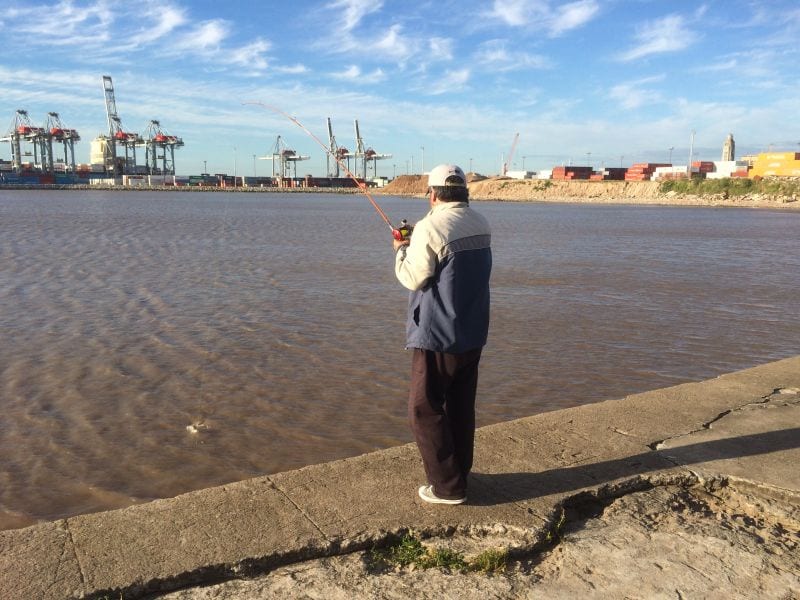
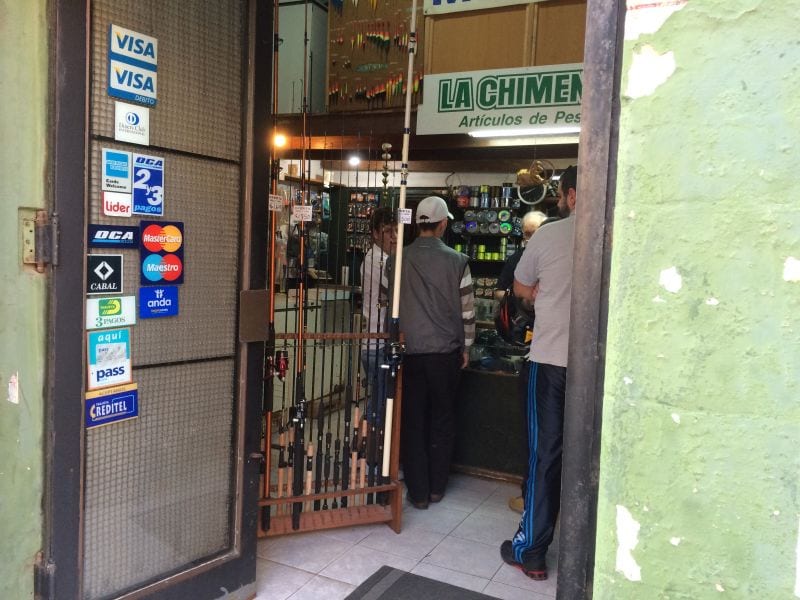
There is a slight wind, the sky is clear, and the water of the Rio de la Plata is light brown. You cast as far as your heavy weight, heavy line, a twelve foot pole and open faced reel will let you go. There are cars parked with open trunks as men unload tackle boxes, plastic bags of bait shrimp, coolers with beer and soft drinks. At the very tip of the pier, young men crawl over rocks to cast out where it is deepest. The water is deep here and, not far away, cargo ships come into port to unload containers full of a cities needs.
Walking the course way, one sees poles bend and fishermen keep lines taut as they turn their reels, shorten line, and beach their pescado. When the hooked fish gets close to the rocks, it is lifted into the air and swung, like cargo , further up onto the rocks where it is pinned with work boots and then put on a stringer or into a plastic bag, or cut up for bait. The fish are mostly light skinned catfish. They have two long whiskers, broad mouths, and the soft looking white belly of bottom feeders.
Several of us strollers go all the way to the pier’s end and sit, feel the wind and watch the sun drop.
Colors appear on the city that make it seem less harsh. After a half hour, it is time to head home and leave anglers to their mission. They won’t be out long. They either catch their fill and pack up early, or get bored and go home.
Fishing is where rubber tires meet the road, where hopes and dreams meet hooks and sinkers.
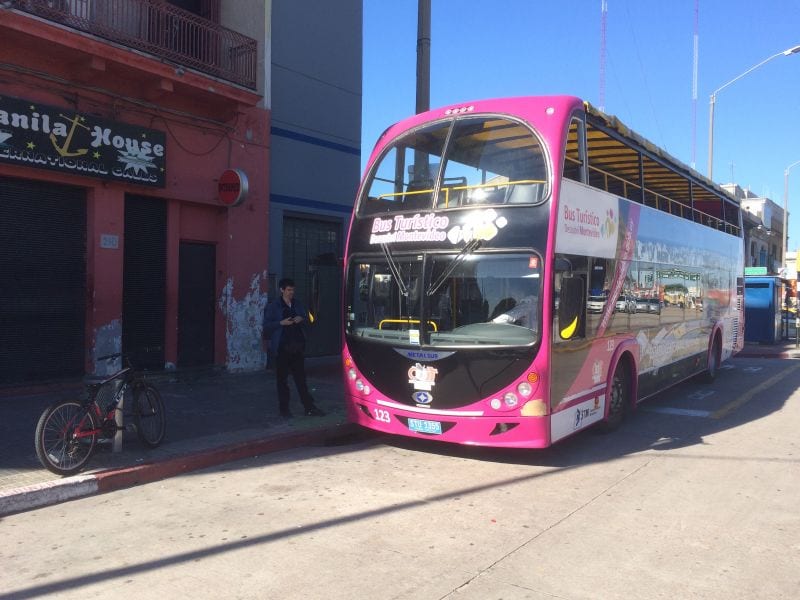
There aren’t many bargains for the traveler but one is sightseeing buses you find in large South American cities.
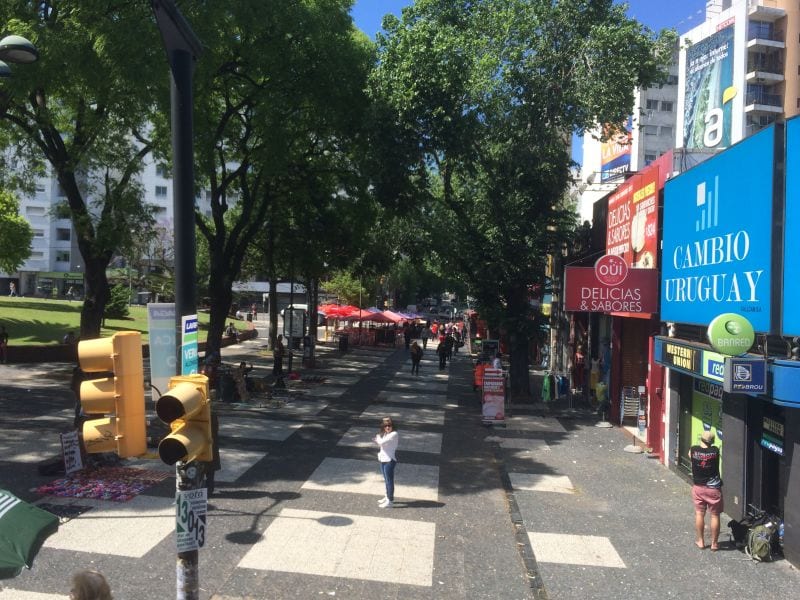
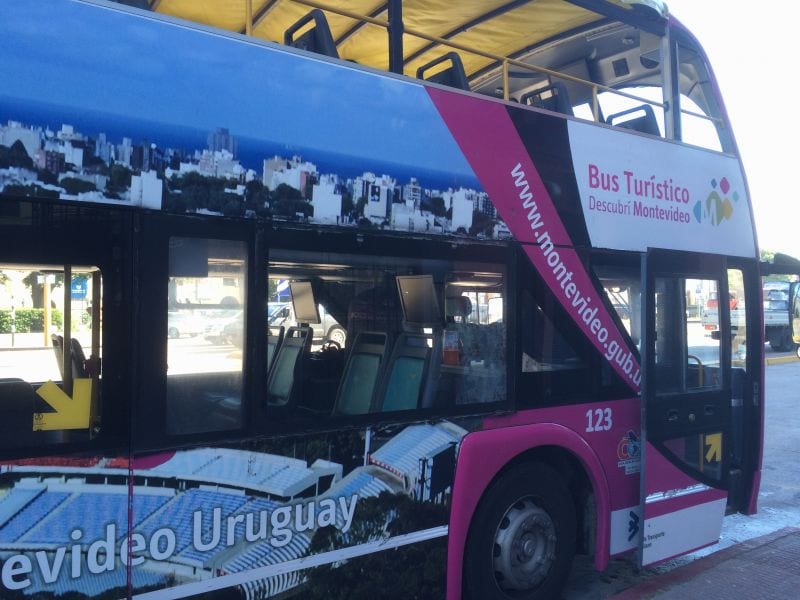
These double deck buses run routes through the city like a regular bus but they stop at multiple tourist destinations where you can exit and sight see, then catch the bus home on its next return.
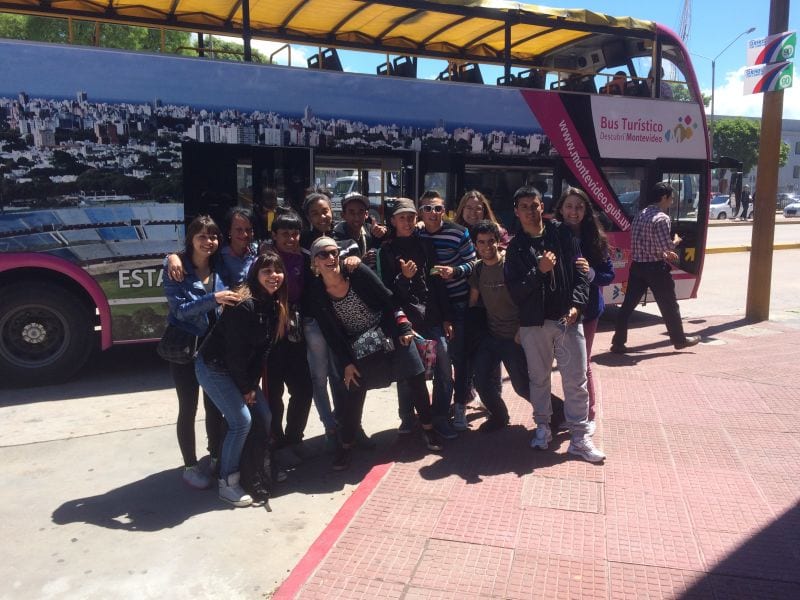
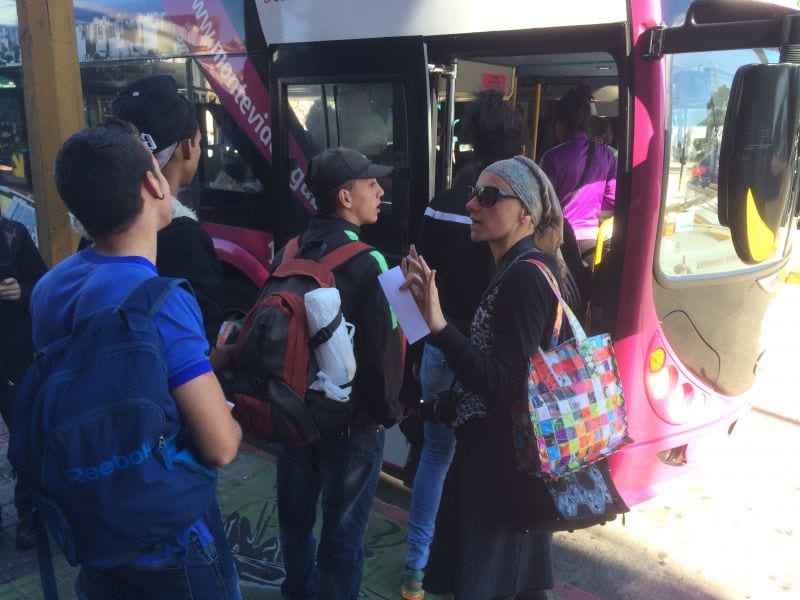
This big pink bus is parked a half block from my front door and with ticket in hand I follow a bunch of school kids aboard. To the very top deck most of us go and put on headphones that let us listen to guided commentary in our home language.
The kid’s teacher is a short slender young woman wearing sunglasses and a ball cap, a scarf thrown around her neck, pink tennis shoes and a large carry all bag. She has had to monitor her brood the entire ride, especially the boys. There are always high maintenance students. Without them, a teacher’s job would be a walk in the park.
This sightseeing bus is like riding on the broad back of an elephant as natives scamper out of your way, as clouds drift above like laundry caught by the wind.
The kid’s class photo, taken after touring, is cute, and, for some of these kids, this outing will be remembered fondly at school reunions where previous winners look like losers and losers have morphed into knockouts.
This twenty dollar scouting ride gives me hope that Montevideo will be a smooth, exciting, stimulating, enlightening city worth visiting.
Tomorrow I ride this same pink bus to Punta Carrera, the National Museo of Futball and the Botanical Gardens.
We all like bargains.


Recent Comments